News report
EU's Kallas and Wadephul: Russia's Bucha Crimes Must Be Punished
Kaja Kallas, the EU High Representative, and German Foreign Minister Johann Wadephul stated that crimes committed by Russia in Bucha must face justice. Their remarks came during their visit to Ukraine on March 31, 2026.
Share this article
Share to social platforms, or copy the article link and share text manually.
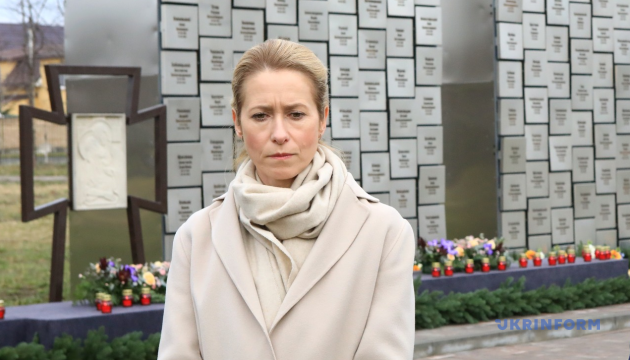
Photo: Ukrinform EN
At a glance
- Kaja Kallas and Johann Wadephul insist on holding Russia accountable for Bucha crimes.
- Bucha symbolizes the brutality of the Russian invasion and civilian suffering.
- The EU supports establishing a Special Tribunal for aggression against Ukraine.
- Both ministers highlighted the importance of documenting Russian war crimes.
- The visit emphasizes Ukraine's integration path with the EU, reinforcing solidarity.
Why it matters
The EU's commitment to accountability reflects a crucial step in addressing war crimes and supporting Ukraine. Establishing a Special Tribunal would reinforce global standards for justice.
https://www.ukrinform.net/rubric-polytics/4107495-kallas-and-wadephul-state-in-bucha-that-russias-crimes-must-not-go-unpunished.html
What Happened
European Union officials, including High Representative for Foreign Affairs Kaja Kallas and German Foreign Minister Johann Wadephul, visited Bucha, Ukraine, on March 31, 2026. They affirmed the EU's commitment to ensuring accountability for the atrocities committed during Russia's full-scale invasion, particularly the mass killings of civilians in Bucha.
In a statement posted on the social media platform X, Kallas highlighted the significance of Bucha as a symbol of the war's brutality. She detailed the horrific nature of the crimes, describing how many civilians were shot at close range, some even with their hands tied.
Kallas emphasized that such acts cannot be denied and that the EU is committed to bringing those responsible to justice. Wadephul echoed her sentiments, condemning the mass killings of Bucha residents which, he stated, have come to symbolize Russian war crimes.
He recalled the distressing scenes encountered by Ukrainian soldiers upon liberating the suburb. Wadephul remarked that images of civilians shot in the streets and buried in mass graves are burned into the collective memory.
He further stated that Bucha represents not only the atrocities faced by its residents but also reflects on the broader pattern of violence and inhumanity across Ukraine, invoking other incidents like the Izyum massacres and the bombing at Kramatorsk. Wadephul underscored that the day’s discussions among EU foreign ministers in Kyiv delivered a clear message that Ukraine remains an integral part of the European family.
Key Details - Kallas reiterated the need for a Special Tribunal to address the Crime of Aggression against Ukraine. - Wadephul emphasized that responsibility for crimes must be acknowledged, reflecting on the global reaction during the liberation of Bucha.
- Both officials reaffirmed their support for Ukraine’s path towards EU integration, chosen during the 2014 Euromaidan protests. - They highlighted ongoing efforts to document and gather evidence of Russian war crimes.
Why It Matters
The statements from Kallas and Wadephul reaffirm the EU's resolve to hold those responsible for war crimes accountable. Establishing a Special Tribunal is seen as crucial for justice, which could set a precedent for future international legal actions against aggressors. The focus on Bucha serves to remind the international community of the human cost of the conflict and the importance of solidarity with Ukraine.
Background
Bucha gained notoriety for the horrific crimes committed against civilians during Russia's occupation in the early stages of the invasion that began in February 2022. The release of disturbing images and reports following the town's liberation revealed extensive violations of human rights and international law.
The brutality witnessed there has become a focal point in discussions about accountability and justice for victims of the ongoing conflict. International calls for a Special Tribunal echo ongoing advocacy for the establishment of mechanisms to punish those involved in war crimes.
The EU's commitment to support these efforts signals a united front in promoting human rights and judicial accountability.
Source: Ukrinform EN
This report is maintained as a live newsroom article. Headlines and top paragraphs may be tightened when fresh reporting changes the clearest angle.
Newsletter
Get the next major Ukraine report
Follow the strongest verified developments with a cleaner newsroom brief and direct follow-up coverage.
Report format
Fast lead first, then fuller context.
Source photo stays distinct from any illustration.
Related coverage stays inside the same reporting thread.