News update
European Mayors Seek Ukrainian Insights on Community Security
At the Urban 7 Mayors’ summit in Nancy, Vinnytsia Mayor Serhii Morhunov reported growing interest from European mayors in Ukraine's community security resilience. He highlighted the need for expertise in preparing high-quality infrastructure projects.
Share this article
Share to social platforms, or copy the article link and share text manually.
Developing story
This page is updated as verified details move. The lead and top sections are tightened first when the clearest confirmed angle changes.
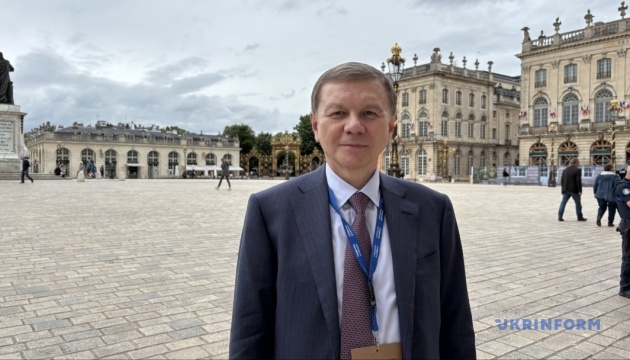
Photo: Ukrinform EN
At a glance
- Vinnytsia Mayor stressed increasing European interest in Ukraine's security strategies.
- European mayors require guidance in developing community security resilience plans.
- Collaboration with European cities may enhance Ukraine's infrastructure project standards.
- Successful joint projects, such as with Sweden, set a precedent for future cooperation.
- Timely infrastructure development is crucial for repatriating displaced Ukrainians.
Why it matters
European interest in Ukraine's community resilience strategies may lead to better cooperative security measures and infrastructure upgrades. Establishing robust connections is vital as Ukraine rebuilds after the conflict.
https://www.ukrinform.net/rubric-vidbudova/4131030-european-mayors-interested-in-ukrainian-communities-security-resilience-experience-vinnytsia-mayor.html
What Happened
At the Urban 7 Mayors’ summit held in Nancy, France, on June 6, 2026, Vinnytsia Mayor Serhii Morhunov conveyed a message of increasing interest among European mayors regarding Ukraine's community security resilience. This interest comes at a time when Ukrainian cities are seeking European expertise to enhance their infrastructure projects to meet international standards.
Key Details
Morhunov noted that during a recent visit by mayors from Germany, Poland, and France to Vinnytsia, many expressed a desire to learn from Ukraine's experience in creating effective community security initiatives. In particular, local German municipality officials sought advice on developing their own security resilience plans, as their governments mandate that municipalities establish these protocols.
The Mayor remarked, "They openly tell us that their governments require communities and municipalities to formulate security plans. This is an area where every Ukrainian community has something to share.” Morhunov emphasized the importance of sharing experiences and how Vinnytsia's unique context could provide valuable insights to European counterparts.
He pointed out that participation in international forums like this is crucial not merely for political support but for fostering meaningful connections and gaining necessary expertise. Morhunov stated, “It is important for us to achieve concrete results in terms of project implementation or preparation for implementation.” Ukrainian cities necessitate assistance especially in preparing feasibility studies that align with European standards.
Morhunov illustrated this by discussing Vinnytsia's need to develop a comprehensive water quality strategy, which includes assessing water resources and optimizing wastewater treatment facilities. He noted that such documentation must adhere to international norms for clarity and acceptance by financial institutions.
Morhunov also shared a successful instance of collaboration with Swedish partners, who funded approximately €1 million for the analysis of wastewater management and energy complex developments. This project took over a year but ultimately enhanced Vinnytsia's capability to engage with various banks and international financial organizations.
While emphasizing the urgency for coherent infrastructure projects in Ukraine, Morhunov cautioned that European administrative processes tend to progress slower than desired. He articulated, “In Ukraine, we need everything done quickly.
That is not how they operate, although we continue to ask.” The Mayor concluded with a sense of urgency, insisting on the necessity to create livable communities post-war to encourage displaced Ukrainians to return from abroad. He stressed that delays in establishing these conditions might deter many from coming back, indicating the critical timeframe faced by Ukrainian cities.
Why It Matters
This interaction reflects a growing trend where European municipalities seek to learn from Ukraine's crisis response strategies. Strengthening collaborative relationships can lead to resource sharing and improved community safety in both regions.
Background
The Urban 7 initiative is geared toward fostering cooperation among cities from G7 nations, enabling them to engage in discussions about common challenges. Ukraine, facing unique issues stemming from the ongoing conflict with Russia, has been leveraging such platforms to enhance both its resilience and its international partnerships.
Source: Ukrinform EN
This report is maintained as a live newsroom article. Headlines and top paragraphs may be tightened when fresh reporting changes the clearest angle.
Newsletter
Get the next Ukraine update
Track the latest policy, diplomacy, aid, and security changes without losing the thread.
Update format
This template prioritizes developments over recap.
Context stays short and tied to the current turn in the story.
The page is designed for repeat readers checking what changed.