News report
EU Court Rules on Freezing Russian Trust Assets Amid Sanctions
The European Union can freeze Russian assets held in trusts linked to individuals under sanctions imposed due to the ongoing conflict in Ukraine. This ruling was reported on May 21, 2026, by Ukrinform, citing the European Court's decision.
Share this article
Share to social platforms, or copy the article link and share text manually.
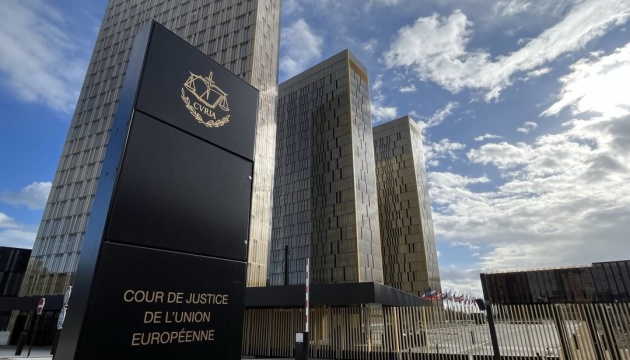
Photo: Ukrinform UA
At a glance
- EU court ruling allows freezing of Russian trust-held assets under sanctions.
- Assets can be classified as belonging to sanctioned individuals based on influence, not direct ownership.
- Italy's frozen assets case involved companies and a yacht linked to sanctioned Russians.
- December 2025 ruling permitted indefinite immobilization of Russian sovereign assets.
- Loans to Ukraine tied to reparations from Russia, as agreed by EU leaders.
Why it matters
The ruling enhances EU sanctions by allowing the freezing of assets held in trusts linked to sanctioned individuals. This broader legal interpretation aims to prevent evasion through complex ownership structures, reflecting the EU's commitment to accountability in the context of the Ukraine conflict.
https://www.ukrinform.ua/rubric-economy/4125856-evrosouz-moze-zamorozuvati-rosijski-aktivi-aki-nalezat-trastam-risenna-sudu.html
What Happened
On May 21, 2026, the European Court issued a ruling enabling the European Union to freeze assets related to Russians sanctioned for their roles in the war against Ukraine, even when those assets are held in trusts. The court's decision clarified how the terms "ownership" and "control" should be interpreted in the context of these sanctions.
This ruling addresses the complexities of legal ownership and control, allowing for a broader interpretation that includes all forms of influence or authority over the assets. It suggests that assets can be deemed as belonging to a trust's founder or beneficiary if they possess the authority to utilize, benefit from, or make decisions regarding those assets, even without a direct legal connection to sanctioned individuals.
Key Details - The ruling arose from three cases initiated in Italy, which involved assets frozen due to their ownership by Russians under EU sanctions. - Italian authorities had previously frozen the assets of companies and a yacht held in trusts due to their indirect ownership by sanctioned individuals.
- The affected companies contested the freezes, arguing that the sanctioned individuals lacked control over the assets in question. - In December 2025, the EU decided to indefinitely immobilize Russian sovereign assets, eliminating the need for reapproval every six months.
- EU leaders agreed to have Ukraine repay loans for 2026-2027 only after receiving reparations from Russia.
Why It Matters
This ruling is significant as it strengthens the EU's ability to enforce sanctions by broadening the definitions of asset control and ownership. By allowing the freezing of trust assets, the EU aims to ensure that individuals subject to sanctions cannot evade restrictions through complex ownership structures. This move is part of ongoing efforts to hold Russia accountable for its actions in Ukraine.
Background
The decision comes in the wake of increasing sanctions against Russia due to its ongoing military actions in Ukraine. The EU has consistently worked to tighten these sanctions, ensuring that they remain effective and difficult to circumvent.
In previous rulings, including a February 2026 judgment, the EU Court reinforced the authority of member states to block the registration of vehicles imported from Russia to prevent sanctions evasion. For previous updates on this evolving situation, the discourse around the use of frozen Russian assets for Ukrainian support has gained traction within European discussions, further illustrating the strategic economic measures being implemented.
Source: Ukrinform UA
This report is maintained as a live newsroom article. Headlines and top paragraphs may be tightened when fresh reporting changes the clearest angle.
Newsletter
Get the next major Ukraine report
Follow the strongest verified developments with a cleaner newsroom brief and direct follow-up coverage.
Report format
Fast lead first, then fuller context.
Source photo stays distinct from any illustration.
Related coverage stays inside the same reporting thread.