News update
Estonian Foreign Minister Urges EU to Increase Pressure on Russia
Estonian Foreign Minister Margus Tsahkna stated that the EU's strategy should focus on increasing pressure on Russia and support for Ukraine. He made these remarks in an interview with Ukrinform.
Share this article
Share to social platforms, or copy the article link and share text manually.
Developing story
This page is updated as verified details move. The lead and top sections are tightened first when the clearest confirmed angle changes.
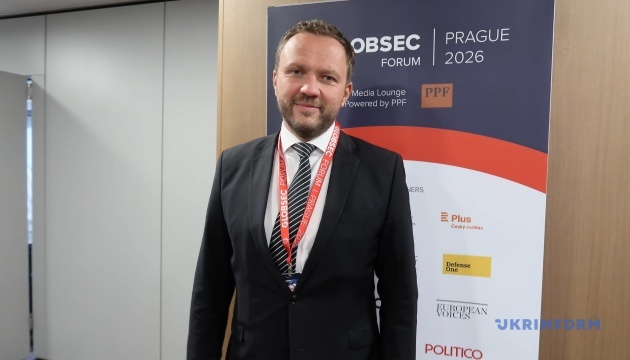
Photo: Ukrinform UA
At a glance
- Estonia's Foreign Minister calls for increased EU pressure on Russia.
- Current talks to end the war in Ukraine are non-existent, according to Tsahkna.
- Tsahkna suggests a two-pronged approach: more pressure on Russia and support for Ukraine.
- He warns against positioning Europe as a mediator in negotiations.
- Integration of Ukraine into the EU and NATO is deemed essential for security.
Why it matters
The comments from Estonian Foreign Minister Tsahkna highlight the importance of a unified European strategy in response to Russia's actions. By maintaining pressure on Russia while supporting Ukraine, the EU may strengthen its geopolitical stance and contribute to regional stability.
https://www.ukrinform.ua/rubric-polytics/4127584-strategieu-es-mae-buti-posilenna-tisku-na-rosiu-ta-dopomogi-ukraini-glava-mzs-estonii.html
What Happened
Estonian Foreign Minister Margus Tsahkna indicated that the European Union must adjust its strategy in response to the ongoing war in Ukraine. Speaking in an interview with Ukrinform, he stated that there is currently no active negotiation table to bring about an end to the conflict, necessitating a focus on elevating pressure on Russia while expanding aid to Ukraine.
Tsahkna emphasized that the practical approach is to maintain a two-fold strategy: exert more pressure on the Kremlin and increase assistance to Ukraine. He underscored the fact that, at present, Russian President Vladimir Putin is unwilling to engage in meaningful discussions.
According to Tsahkna, to bring Putin to the negotiating table, he must be positioned in a way that compels him to reconsider his objectives.
Key Details
Tsahkna remarked that many in Europe have begun to perceive Putin's stance as weaker. Despite this, he cautioned against seducing the Russian leader into thinking that European powers are willing to negotiate without first establishing a basis for pressure.
He likened the current climate to instances where, in the past, Western leaders may have inadvertently allowed Russia to dictate conditions. The minister stated, "Mediation is not a position Europe should take...
This is a dangerous path that allows Putin to present his demands and pull Europe into a role it should not fulfill." He articulated that the focus should remain on European security as a joint concern with Ukraine, rather than allowing the conflict to be framed solely in nationalistic terms. Tsahkna also pointed out the necessity of integrating Ukraine into the European Union and NATO eventually.
This inclusion is vital to mitigate the risk of neutral or buffer zones developing between NATO, the EU, and Russia, he added. He asserted that mutual security guarantees between Europe and Ukraine are essential moving forward.
The discussion about who will represent the EU in any potential negotiations with Russia continues to take place in Europe. Notably, the United States has indicated it does not wish to continue as a mediator at this stage of the conflict, showing a shift in diplomatic roles as the situation evolves.
Why It Matters
The remarks from Tsahkna reflect growing concerns in Europe regarding the urgency to support Ukraine against ongoing Russian aggression. Strengthening the EU's stance could unify European nations under a shared strategy while pressuring Moscow to reconsider its military aspirations.
Background
Tensions between Russia and Ukraine have persisted, with no clear resolution in sight. Various European nations, including Estonia, are contemplating their roles in potential negotiations. The geopolitical landscape is shifting, and decisions made now may influence the broader security architecture in Europe for years to come.
Source: Ukrinform UA
This report is maintained as a live newsroom article. Headlines and top paragraphs may be tightened when fresh reporting changes the clearest angle.
Newsletter
Get the next Ukraine update
Track the latest policy, diplomacy, aid, and security changes without losing the thread.
Update format
This template prioritizes developments over recap.
Context stays short and tied to the current turn in the story.
The page is designed for repeat readers checking what changed.