News update
Zhytomyr Resident Sentenced to 15 Years for Leaking Military Data t...
The convicted individual shared critical military details over four months, raising serious concerns about national security. This case underscores the continued threat of espionage in Ukraine amid ongoing conflict.
Share this article
Share to social platforms, or copy the article link and share text manually.
Developing story
This page is updated as verified details move. The lead and top sections are tightened first when the clearest confirmed angle changes.
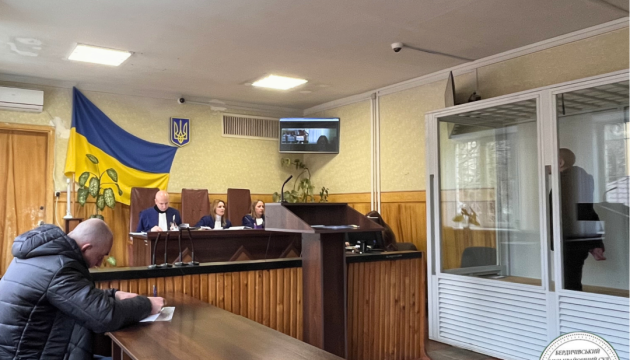
Photo: Ukrinform EN
At a glance
- A Zhytomyr resident was sentenced to 15 years for leaking military aircraft data to Russian intelligence.
- The convicted individual provided critical information about Ukrainian Armed Forces operations over a span of four months.
- Evidence presented during the trial included communications with a person claiming to be an FSB operative.
- The court's ruling classified the actions as treason under martial law.
- This case reflects a larger campaign by Ukraine to combat espionage and ensure national security.
Why it matters
This case is pivotal in illustrating Ukraine's ongoing struggle against espionage activities during a critical period of military conflict. The lengthy sentence sends a strong message about the legal consequences of compromising national security and underscores the Ukrainian government’s commitment to safeguarding its defense apparatus from internal threats.
https://www.ukrinform.net/rubric-crime/4104814-zhytomyr-resident-sentenced-to-15-years-for-leaking-ukrainian-aircraft-data-to-russia.html
What Happened
A resident of the Zhytomyr region was sentenced to a significant 15 years in prison for leaking sensitive information about the operations of the Ukrainian Armed Forces, specifically related to military aircraft. This ruling was handed down by the Berdychiv City District Court, highlighting serious national security implications amid a tense military environment.
The defendant, who lived in proximity to a military airbase, reportedly shared intelligence on various aviation activities, including the movements and operations of military jets within Ukrainian airspace. His actions were found to have occurred over a continuous period of four months, raising alarms about the security of military operations and personnel.
Key Details
The investigation revealed that the individual had attracted the attention of Russian intelligence services after participating in discussions on a pro-Russian Telegram channel. Evidence presented during the trial included communications with someone posing as an operative of the FSB (Federal Security Service of the Russian Federation).
The court found these interactions particularly alarming, as they indicated a dangerous level of cooperation with entities hostile to Ukraine. During legal proceedings, the accused partially admitted to his activities but contended that he did not knowingly engage with a Russian agent and was unaware of the illegal nature of his actions.
Why It Matters
This case is pivotal in illustrating Ukraine's ongoing struggle against espionage activities during a critical period of military conflict. The lengthy sentence sends a strong message about the legal consequences of compromising national security and underscores the Ukrainian government’s commitment to safeguarding its defense apparatus from internal threats.
Background
The court, however, conveyed that ignorance of the law is not a valid defense in cases of national security violations. As a result, he was convicted of treason under martial law, falling under Part 2 of Article 111 of the Ukrainian Criminal Code.
The court stressed the seriousness of the crime, illuminating how such intelligence leaks can jeopardize national defense efforts. The implications of treasonous acts like these are particularly dire during times of conflict, putting military personnel and operational efficacy at risk.
The sentencing represents a critical step in Ukraine's broader efforts to combat espionage and protect sensitive military information. In a related note, earlier this month, another individual—a member of the Russian FSB—was sentenced to 15 years in the Khmelnytskyi region for providing intelligence about Ukraine's air defense systems.
This pattern of legal accountability illustrates Ukraine's determination to address and curb espionage related to the ongoing conflict and maintain the integrity of its national security frameworks.
Source: Ukrinform EN
This report is maintained as a live newsroom article. Headlines and top paragraphs may be tightened when fresh reporting changes the clearest angle.
Newsletter
Get the next Ukraine update
Track the latest policy, diplomacy, aid, and security changes without losing the thread.
Update format
This template prioritizes developments over recap.
Context stays short and tied to the current turn in the story.
The page is designed for repeat readers checking what changed.