News report
Zelensky Sanctions 130 Russian Military Commanders and Clergy
Ukrainian President Volodymyr Zelensky has enacted sanctions targeting 130 Russian military commanders and religious leaders. The decision, reported by the Office of the President, follows recommendations from Ukraine's National Security and Defense Council.
Share this article
Share to social platforms, or copy the article link and share text manually.
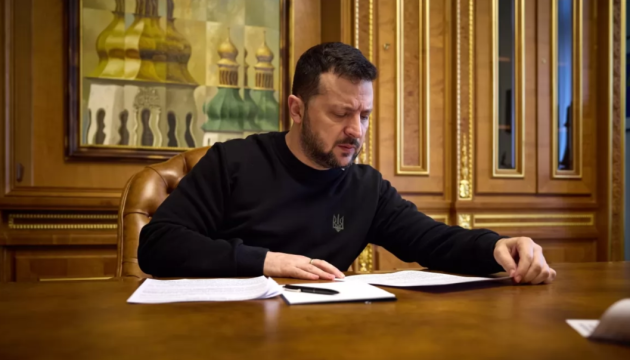
Photo: Ukrinform EN
At a glance
- 130 Russians sanctioned, including military commanders and clergy.
- 121 military personnel linked to missile strikes on Ukraine targeted.
- Over 4,100 missiles used against Ukraine since the invasion began.
- Sanctions will synchronize with international partner actions.
- Identified individuals include commanders responsible for civilian casualties.
Why it matters
Zelensky's sanctions are a strategic measure to hold individuals accountable for military aggression against Ukraine. This step enhances international pressure on Russia while involving global partners in the sanctioning process.
https://www.ukrinform.net/rubric-polytics/4113787-zelensky-imposes-sanctions-on-130-russian-military-commanders-religious-figures.html
What Happened
On April 17, 2026, President Volodymyr Zelensky signed decrees imposing sanctions on 130 Russians involved in military actions against Ukraine and on religious figures who promote Russia's aggression. The sanctions follow decisions from Ukraine's National Security and Defense Council.
The Office of the President reported that the sanctions aimed specifically at Russian military personnel involved in missile attacks against Ukrainian targets. This includes commanders of long-range aviation units responsible for air strikes, who have significantly affected civilian infrastructure.
Key Details
The initial sanctions list comprises 121 military commanders directly associated with large-scale missile strikes on Ukraine. The Office noted that since the onset of the full-scale Russian invasion, Russia has employed over 4,100 airborne missiles.
Targets of these strikes have included hospitals, schools, and urban centers, leading to substantial civilian casualties. Notably, well-documented attacks have occurred at the Okhmatdyt children's hospital, the Amstor shopping center, and various energy infrastructure sites across the country.
Additionally, sanctions were levied against naval commanders and artillery units linked to strikes using ground-launched missiles. In total, Russia has executed more than 1,100 missile strikes via ground systems, resulting in numerous civilian fatalities in various regions.
Why It Matters
Zelensky's recent actions reflect a systematic approach to hold accountable those directly involved in military aggression against Ukraine. The identification of over 100 specific individuals by Ukrainian intelligence marks a significant step in Ukraine’s global efforts to address war crimes and seek justice from the international community.
Cooperation with international partners to synchronize sanctions will enhance the geopolitical pressure on Russia, aiming to curb its military operations against Ukraine.
Background
Ukraine has faced extensive missile and air strikes since the onset of the Russian invasion in February 2022. The continual use of military force against civilian areas highlights the severity of the conflict.
Previous efforts by the Ukrainian government to apply sanctions against individuals and entities supporting Russian military activities have set a precedent for similar actions. The recent sanctions package, according to the Office of the President, is part of a broader strategy to not only apply accountability domestically but to involve international jurisdictions in addressing these crimes.
This is particularly crucial for the religious figures, whose rhetoric aids in legitimizing the violence against Ukrainians. Zelensky's push for sanctions against military and religious leaders reaffirms Ukraine's commitment to combating aggression and receiving necessary global support in the ongoing conflict.
Source: Ukrinform EN
This report is maintained as a live newsroom article. Headlines and top paragraphs may be tightened when fresh reporting changes the clearest angle.
Newsletter
Get the next major Ukraine report
Follow the strongest verified developments with a cleaner newsroom brief and direct follow-up coverage.
Report format
Fast lead first, then fuller context.
Source photo stays distinct from any illustration.
Related coverage stays inside the same reporting thread.