News report
Zelensky Rejects German Proposal for Special EU Membership Format
Ukrainian President Volodymyr Zelensky has formally rejected a proposal from German Chancellor Friedrich Merz regarding a special integration format for Ukraine within the EU. This announcement came in a letter addressed to EU leadership.
Share this article
Share to social platforms, or copy the article link and share text manually.
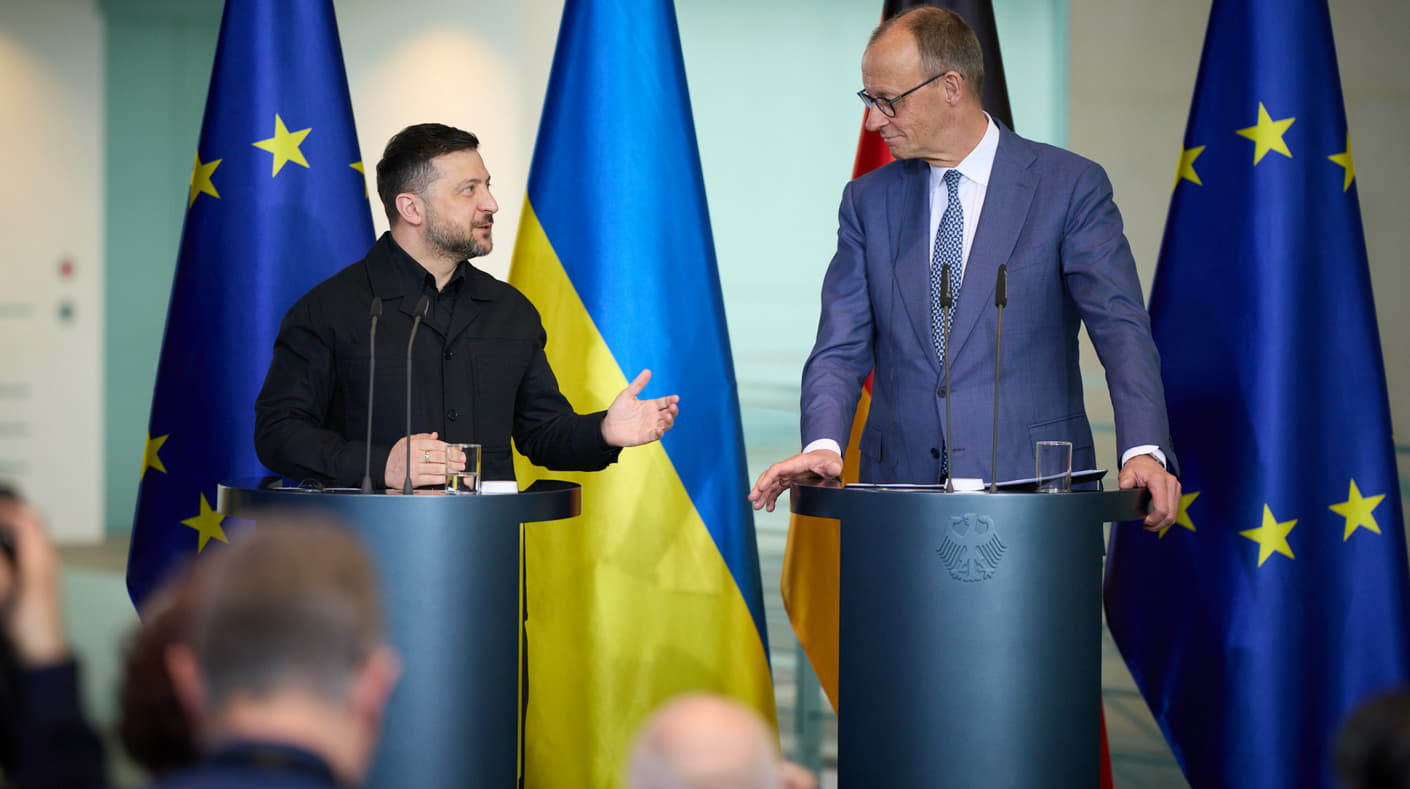
Photo: Ukrainska Pravda UA
At a glance
- Zelensky rejects Merz's proposal for an 'associate membership'.
- Ukraine demands full EU membership without any special statuses.
- Discussion on Ukraine's integration continues despite Zelensky's rejection.
- The response reflects strong public support for EU membership in Ukraine.
- Merz's initiative has sparked further dialogue among EU member states.
Why it matters
Zelensky's response solidifies Ukraine's long-term goal of full EU membership, avoiding interim arrangements. This clarity is essential for maintaining public support and international alignment on Ukraine’s integration aspirations.
https://www.pravda.com.ua/articles/2026/05/25/8036337/
What Happened
In a recent letter, President Volodymyr Zelensky dismissed German Chancellor Friedrich Merz's proposal for a special EU integration format that suggested an alternative to full membership for Ukraine. His firm stance emphasizes that Ukraine seeks only full EU membership. Zelensky's response was noted in a published statement on May 25, 2026.
Key Details
Zelensky's letter highlighted that Ukraine’s goal of joining the European Union is enshrined in its Constitution and is supported by the Ukrainian public. Critics of Merz's proposal argue it risks undermining Ukraine’s aspirations and blurs the path toward EU membership.
Despite this denial, discussions about Ukraine's EU integration continue within the EU framework, influenced significantly by Merz's initiative. The German Chancellor has sparked further dialogue among member states, with other proposals emerging, particularly from Lithuania.
Although the proposal was met with criticism, Zelensky's rejection does not mean the discussion is closed. The German initiative remains relevant, as it could facilitate a beneficial framework for Ukraine, should it be adjusted to meet the interests of both Ukraine and the EU.
Why It Matters
Zelensky's rejection is critical in maintaining a clear and unified goal for Ukraine's EU membership. The discourse around alternative statuses could lead to confusion and setbacks in the progress Ukraine has made towards joining the EU.
The unity in Ukraine’s approach toward EU membership reflects a strong public sentiment that emphasizes full integration rather than interim solutions. Engaging with discussions around Merz's proposal might yield both protective measures and pathways toward eventual full membership.
Background
The push for Ukraine's accession to the EU is part of a broader geopolitical strategy in the context of regional security. Ukraine has been advocating for greater integration with Europe, particularly since the outbreak of conflict with Russia.
Merz's proposal, which suggested a special status distinct from full membership, raised alarms that it could jeopardize Ukraine's current standing among EU candidate nations. Zelensky's firm response to Merz indicates a clear desire to avoid anything that would imply a lesser status for Ukraine compared to Moldova or other Balkan countries.
His insistence on full EU membership aligns with the long-term aspirations of the Ukrainian government and its citizens. Furthermore, maintaining focus on this singular goal is seen as vital, given the ongoing security concerns posed by Russia.
Merz's plan was interpreted by some in Kyiv as a potential decoupling of Ukraine's integration trajectory from that of Moldova, which might set a precedent for future discussions on membership. This context makes it imperative that Ukraine advocates for strategic frameworks that do not deviate from its ultimate goal of full EU membership.
Source: Ukrainska Pravda UA
This report is maintained as a live newsroom article. Headlines and top paragraphs may be tightened when fresh reporting changes the clearest angle.
Newsletter
Get the next major Ukraine report
Follow the strongest verified developments with a cleaner newsroom brief and direct follow-up coverage.
Report format
Fast lead first, then fuller context.
Source photo stays distinct from any illustration.
Related coverage stays inside the same reporting thread.