News report
Ukrainian Forces Destroy Rare Russian Drones in Combat
Ukrainian air defense units have successfully shot down two rare Russian drones: the 'Knyaz Vishchiy Oleg' and 'Izdelie-54'. This event was reported by the 67th Separate Mechanized Brigade through their official Telegram channel.
Share this article
Share to social platforms, or copy the article link and share text manually.
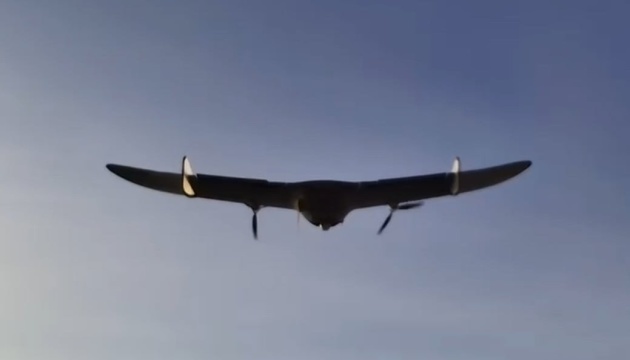
Photo: Ukrinform UA
At a glance
- Ukrainian forces destroyed the 'Knyaz Vishchiy Oleg' and 'Izdelie-54' drones.
- The operation was conducted by the 67th Separate Mechanized Brigade.
- Video evidence of the operation was shared on the brigade's Telegram channel.
- The destroyed UAVs are considered rare in the Russian military's inventory.
- Air defense units are increasingly effective in countering UAV threats.
Why it matters
The destruction of rare Russian drones reflects an advancement in Ukrainian air defense capabilities. This development can impact operational strategies by reducing enemy aerial threats and changing the landscape of the ongoing conflict.
https://www.ukrinform.ua/rubric-ato/4111584-ukrainski-zenitniki-znisili-ridkisni-vorozi-bezpilotniki-knaz-visij-oleg-ta-izdelie54.html
What Happened

On April 12, 2026, Ukrainian air defense units from the 67th Separate Mechanized Brigade destroyed two rare Russian unmanned aerial vehicles (UAVs), specifically the 'Knyaz Vishchiy Oleg' and 'Izdelie-54'. The brigade announced the successful operation via their Telegram account, sharing video evidence of their combat actions.
The report highlights not just the quantity of targets engaged but also their significance. The 'Knyaz Vishchiy Oleg' and 'Izdelie-54' are considered rare models among the Russian drone fleet, marking a tactical victory for Ukrainian defense forces.
This incident showcases the ongoing air combat between Ukrainian and Russian forces, particularly as UAV technology becomes increasingly central to modern warfare.
Key Details
The destruction of these drones occurred during an active operation in eastern Ukraine. The 67th Brigade's air defense unit has been recognized for its effectiveness against aerial threats.
Information about these drone models indicates that they represent advanced technological capabilities utilized by the Russian military, making their loss significant in terms of operational capacity. Additionally, during the previous night, Ukrainian defense forces targeted infrastructure in occupied territories, hitting a fuel depot, a pumping station, and multiple ammunition storage sites.
These coordinated strikes aim to disrupt Russian supply lines and logistical operations on the ground.
Why It Matters
The annihilation of such advanced drones by Ukrainian forces indicates an improvement in air defense capabilities. This development could alter the dynamics of ground operations and air superiority in the conflict. As both sides grapple for control, the destruction of rare UAVs disrupts Russian plans and reduces their operational effectiveness.
Background
Drones have played a pivotal role in the conflict between Ukraine and Russia, serving various purposes including reconnaissance, surveillance, and targeted attacks. The introduction of more advanced UAV models like the 'Knyaz Vishchiy Oleg' and 'Izdelie-54' reflects Russia's emphasis on technology in combat.
As the war progresses, both nations continue to adapt and enhance their military strategies. The conflict has seen a continuous escalation in the use of drone technology, with each side seeking advantages over the other.
Ukrainian air defense has increasingly focused on neutralizing these threats, making incidents like these crucial for maintaining military balance in the region.
Source: Ukrinform UA
This report is maintained as a live newsroom article. Headlines and top paragraphs may be tightened when fresh reporting changes the clearest angle.
Newsletter
Get the next major Ukraine report
Follow the strongest verified developments with a cleaner newsroom brief and direct follow-up coverage.
Report format
Fast lead first, then fuller context.
Source photo stays distinct from any illustration.
Related coverage stays inside the same reporting thread.