Breaking news
Ukrainian Air Defense Intercepts 90 of 97 Russian Drones on March 14
Ukraine?s Air Force said air-defense units intercepted 90 of 97 Russian drones launched overnight, limiting the impact of another large-scale attack on Ukrainian territory.
Share this article
Share to social platforms, or copy the article link and share text manually.
Developing story
This page is updated as verified details move. The lead and top sections are tightened first when the clearest confirmed angle changes.
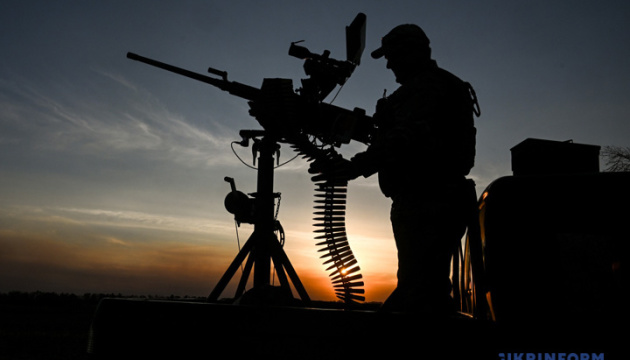
Photo: Ukrinform UA
At a glance
- Ukrainian air defense intercepted 90 of 97 drones during a nighttime attack.
- Drones were launched from various locations across Russia, targeting Ukraine.
- The attack primarily involved Shahed drones, with approximately 70 identified.
- Ongoing aerial threats indicate persistent challenges for Ukrainian defense.
- This event reflects Russia's increasing reliance on drone warfare strategies.
Why it matters
The report matters because it shows both the scale of continued Russian drone attacks and the extent to which Ukrainian air-defense capacity still shapes the damage outcome overnight.
https://www.ukrinform.ua/rubric-ato/4101731-sili-ppo-zneskodili-90-z-97-bezpilotnikiv-akimi-rosiani-z-vecora-atakuvali-ukrainu.html
Air Defense Reported a High Interception Rate
Ukraine's Air Force said air-defense units intercepted 90 of 97 Russian drones launched overnight, describing the operation as another large-scale attack involving multiple launch points. According to the report, around 70 of the incoming drones were identified as Shahed models, which continue to be used heavily in Russian attacks on Ukrainian territory.
The drones were reportedly launched from several locations inside Russia and from occupied Crimea. That pattern reflects the now-familiar use of dispersed launch areas, which can complicate response planning and force Ukrainian defenses to track threats approaching from different directions.
How the Interceptions Were Carried Out
The Air Force said the response involved several layers of Ukraine's defense system, including aviation, anti-aircraft missile units, electronic warfare tools, and mobile fire groups. That combination has become central to Ukraine's effort to contain large drone attacks, particularly when waves of Shahed-type systems are used to stretch defensive coverage.
The reported interception figure suggests that Ukraine was able to blunt most of the strike package. Even so, the article noted that some drones still reached their targets and that debris fell in at least two locations, underscoring that a high interception rate does not eliminate risk on the ground.
Part of a Wider Pattern of Aerial Pressure
The report framed the attack within a broader pattern of escalating aerial pressure. It referred to the previous night, when Ukrainian forces said they had to respond to hundreds of Russian aerial assets, including both missiles and drones. That context matters because it shows the overnight drone raid was not an isolated spike, but part of a sustained campaign.
Repeated attacks of this scale force Ukraine to preserve readiness night after night. They also test the resilience of air-defense crews, equipment, and command systems over time, especially when Russia uses drones not only to strike but also to wear down defensive resources.
Why the Overnight Figures Matter
For readers, the significance of the 90-of-97 figure lies in what it says about two parallel realities. On one hand, Ukraine continues to demonstrate a substantial ability to intercept large numbers of incoming drones. On the other, Russia continues to generate attacks large enough that even strong interception performance does not remove the threat entirely.
That is why these daily air-defense reports remain important. They are not just operational updates: they also show how the balance between Russian strike volume and Ukrainian interception capacity continues to shape the day-to-day security environment across the country.
Source: Ukrinform UA
This report is maintained as a live newsroom article. Headlines and top paragraphs may be tightened when fresh reporting changes the clearest angle.
Newsletter
Get the next breaking Ukraine update
Receive the fastest lead, key facts, and follow-up links in one concise newsroom note.
Breaking format
The lead carries the core fact first.
Key figures and locations stay near the top.
Related coverage tracks the same reporting line.