News update
Ukrainian Banks Fund Energy Recovery Projects Worth 38.7 Billion UAH
This funding includes over 3,000 loans to businesses and more than 15,000 to individuals, enabling crucial energy capacity development.
Share this article
Share to social platforms, or copy the article link and share text manually.
Developing story
This page is updated as verified details move. The lead and top sections are tightened first when the clearest confirmed angle changes.
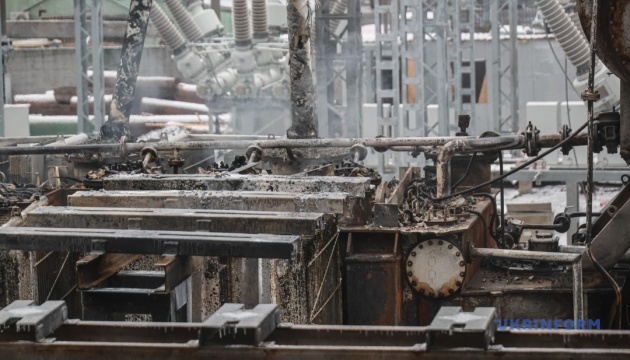
Photo: Ukrinform UA
At a glance
- Banks financed energy recovery projects totaling 38.7 billion UAH.
- Funding covers businesses and individuals across 21 Ukrainian regions.
- Over 3,000 loans were issued to businesses and more than 15,000 to individuals.
- Projects include solar, gas, and wind energy installations.
- Coordinated efforts involve 20 banks signing a supporting memorandum.
Why it matters
The financing of energy recovery projects is vital for Ukraine's infrastructure development and overall economic stability amidst ongoing conflict. It represents a unified effort by financial institutions to bolster energy security crucial for the country's resilience.
https://www.ukrinform.ua/rubric-vidbudova/4100969-banki-profinansuvali-proekti-z-vidnovlenna-energetiki-na-387-milarda-nbu.html
Overview
The National Bank of Ukraine reported that from June 1, 2024, to March 1, 2026, banks approved over 3,000 loans to businesses, totaling 35.9 billion UAH. Additionally, more than 15,000 loans to individuals amounted to 2.8 billion UAH. This financing is essential for developing and restoring energy generation capabilities, contributing an additional 1.405 GW.
Allocation of Funds
Most of the capital has been directed towards constructing solar power plants, as well as gas, hydro/biomass, and wind installations, which together have a total capacity of 587 MW. This comprehensive investment strategy aims to enhance Ukraine's energy infrastructure.
Financing Details
These loans are part of ongoing efforts to recover and modernize energy assets affected by the ongoing conflict. By March 1, 2026, loans are being progressively repaid, resulting in an energy loan portfolio of 25.7 billion UAH for legal entities and 2.2 billion UAH for individuals.
Collaborative Efforts
The initiatives involve 20 banks that manage over 85% of the banking sector's net assets. In June 2024, these banks signed a memorandum committing to support the restoration of energy systems damaged by Russian attacks. The memorandum established a base interest rate for loans starting at 13.5% per annum to revitalize the energy sector.
Significance
These funding efforts illustrate a systematic commitment by Ukrainian banks to bolster the country’s economic recovery and enhance infrastructure resilience amid ongoing challenges. The energy recovery projects are vital for restoring essential services and ensuring energy security for Ukraine.
Source: Ukrinform UA
This report is maintained as a live newsroom article. Headlines and top paragraphs may be tightened when fresh reporting changes the clearest angle.
Newsletter
Get the next Ukraine update
Track the latest policy, diplomacy, aid, and security changes without losing the thread.
Update format
This template prioritizes developments over recap.
Context stays short and tied to the current turn in the story.
The page is designed for repeat readers checking what changed.