Breaking news
Ukrainian Air Defense Neutralizes 117 of 126 Russian Drones in March 12 Attack
In a coordinated attack, Ukrainian forces successfully intercepted a majority of Russian drones, marking a notable achievement in air defense operations on March 12. This response highlights Ukraine's ongoing commitment to security in the face of escalating hostilities.
Share this article
Share to social platforms, or copy the article link and share text manually.
Developing story
This page is updated as verified details move. The lead and top sections are tightened first when the clearest confirmed angle changes.
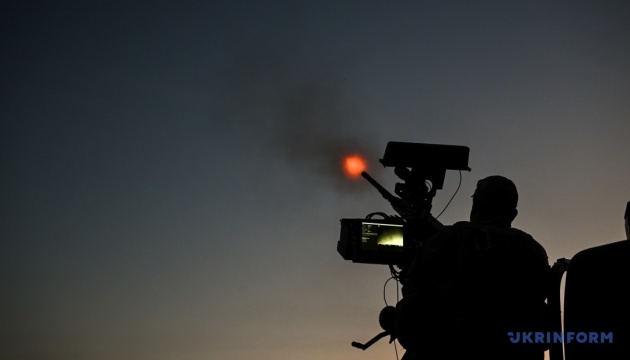
Photo: Ukrinform UA
At a glance
- Ukrainian air defense successfully neutralized 117 out of 126 launched drones.
- The aerial assault included a ballistic missile of the Iskander-M type.
- Drone launches originated from multiple Russian cities and occupied Crimea.
- Ukrainian military utilized a variety of defense units, including mobile fire groups.
- Despite the intensity of the attack, no casualties were reported.
Why it matters
This interception highlights Ukraine's air defense effectiveness in countering Russian aerial assaults. Successfully neutralizing the drones not only protects civilian lives and military assets but also reflects Ukraine's strategic defense posture in the ongoing conflict.
https://www.ukrinform.ua/rubric-ato/4101041-ppo-z-vecora-zneskodila-117-zi-126-rosijskih-bezpilotnikiv.html
Successful Interception of Drones
On the evening of March 12, 2026, Ukrainian air defense forces intercepted 117 out of 126 Russian drones during a coordinated aerial assault. The attack began around 6 PM and involved various unmanned aerial vehicles, including Shahed drones known for previous attacks against Ukrainian targets.
Additional Hostile Activities
Alongside drone attacks, Russian forces also fired an Iskander-M ballistic missile from the Rostov region. Launches were reported from several Russian cities, including Orel, Bryansk, Kursk, Millierovo, and Primorsko-Akhtersk, indicating a widespread threat.
Military Response
In response to this assault, the Ukrainian military promptly activated its comprehensive air defense systems, which incorporated aviation units, anti-aircraft missile troops, electronic warfare units, and mobile fire groups. By 8 AM on March 13, confirmation came that 117 enemy drones had been neutralized, demonstrating the effectiveness of Ukraine’s military readiness.
Ongoing Threats
Despite the success, the scale of the attack raised concerns as additional hostile drones were detected within Ukrainian airspace. Explosions were reported in Dniprovskyi district of Dnipropetrovsk Oblast during the air raid alert, but fortunately, there were no casualties.
Conclusion
This incident illustrates the persistent intensity of the conflict in Ukraine and the readiness of its armed forces to respond to aerial threats. The successful interception of these drones underscores Ukraine's commitment to protecting both military and civilian infrastructure from ongoing Russian aggression.
Source: Ukrinform UA
This report is maintained as a live newsroom article. Headlines and top paragraphs may be tightened when fresh reporting changes the clearest angle.
Newsletter
Get the next breaking Ukraine update
Receive the fastest lead, key facts, and follow-up links in one concise newsroom note.
Breaking format
The lead carries the core fact first.
Key figures and locations stay near the top.
Related coverage tracks the same reporting line.