News update
Ukraine Rejects Hungarian Delegation Visit Set for March 11
The Ukrainian Foreign Ministry has formally opposed the planned visit of a Hungarian delegation, citing rising tensions over energy cooperation as the reason for the request to reschedule.
Share this article
Share to social platforms, or copy the article link and share text manually.
Developing story
This page is updated as verified details move. The lead and top sections are tightened first when the clearest confirmed angle changes.
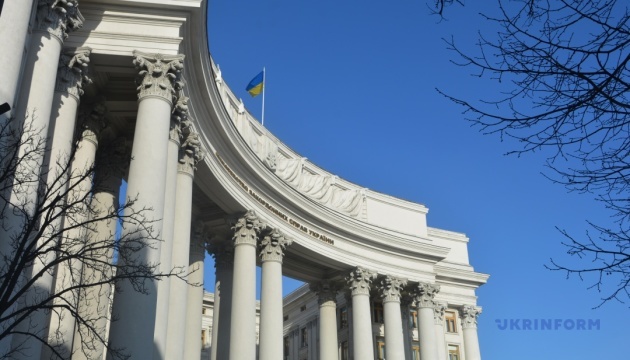
Photo: Ukrinform EN
At a glance
- Ukraine's Foreign Ministry declared the Hungarian delegation's visit timing unacceptable.
- Hungary's Deputy Minister of Energy Gábor Czepek was to lead the delegation.
- The visit was purportedly aimed at discussing Druzhba pipeline operations.
- Tensions escalated with accusations between the Hungarian and Ukrainian foreign ministers.
- Ukraine emphasized that the delegation lacks official status during its visit.
Why it matters
The timing of the Hungarian delegation's visit is significant as it reflects ongoing tensions in bilateral relations between Ukraine and Hungary. The dispute centers around energy cooperation, which has critical implications for both countries amid regional security concerns.
https://www.ukrinform.net/rubric-polytics/4100617-ukraine-fm-warns-hungary-timing-of-delegation-visit-unacceptable.html
What Happened
The Ukrainian Foreign Ministry announced its disapproval of a scheduled visit by a Hungarian delegation led by Deputy Minister of Energy Gábor Czepek, originally set for March 11. The ministry has requested that Hungary propose new dates through diplomatic channels.
On March 10, officials expressed dissatisfaction with the visit's timing, which was expected to address the operations of the Druzhba oil pipeline, crucial for energy transport in the region.
Key Details
Hungarian Foreign Minister Péter Szijjártó accused President Volodymyr Zelensky of misrepresenting the delegation's purpose in a social media post on March 11. This comment followed President Zelensky's indication that he was unaware of the delegation's activities.
Tensions escalated when Szijjártó shared correspondence from the Hungarian Embassy confirming the delegation's plans to meet Ukrainian officials. However, the Ukrainian Foreign Ministry clarified that the delegation members lacked official status and had no confirmed meetings in Ukraine.
Background
The Ukrainian Foreign Ministry criticized the characterization of the visitors as a 'delegation,' reflecting ongoing diplomatic friction over energy issues. Hungarian Prime Minister Viktor Orbán previously urged President Zelensky in an open letter to reopen the Druzhba oil pipeline, which has faced disruptions.
In response to these tensions, Ukraine's leadership is also in dialogue with European Council President António Costa regarding necessary repairs to the Druzhba pipeline, damaged due to Russian actions. These diplomatic efforts highlight immediate energy supply challenges and broader implications for Ukraine-Hungary relations amid a sensitive geopolitical landscape.
Source: Ukrinform EN
This report is maintained as a live newsroom article. Headlines and top paragraphs may be tightened when fresh reporting changes the clearest angle.
Newsletter
Get the next Ukraine update
Track the latest policy, diplomacy, aid, and security changes without losing the thread.
Update format
This template prioritizes developments over recap.
Context stays short and tied to the current turn in the story.
The page is designed for repeat readers checking what changed.