Breaking news
Ukraine Launches Online Tattoo Identification Service for War Casualties
This initiative aims to assist families of missing individuals by utilizing tattoo identification methods. The service is accessible via the 'Single Window for Citizens' portal.
Share this article
Share to social platforms, or copy the article link and share text manually.
Developing story
This page is updated as verified details move. The lead and top sections are tightened first when the clearest confirmed angle changes.

Photo: Ukrinform UA
At a glance
- A new online service for tattoo identification has been launched in Ukraine.
- The service aids in identifying war casualties to assist families of the missing.
- Tattoo sketches are published on the 'Single Window for Citizens' portal.
- Users can filter searches by various categories and descriptions.
- Families can report matches directly through hotline or email to expedite identification.
Why it matters
This service marks a significant step in addressing the ongoing humanitarian crisis resulting from the war, providing much-needed support to families searching for missing loved ones. By utilizing tattoo identification methods, authorities hope to enhance the identification process, bringing closure to affected families.
https://www.ukrinform.ua/rubric-society/4099728-v-ukraini-zapustili-onlajnservis-dla-vpiznanna-zagiblih-na-vijni-za-tatuuvannami.html
Service Overview
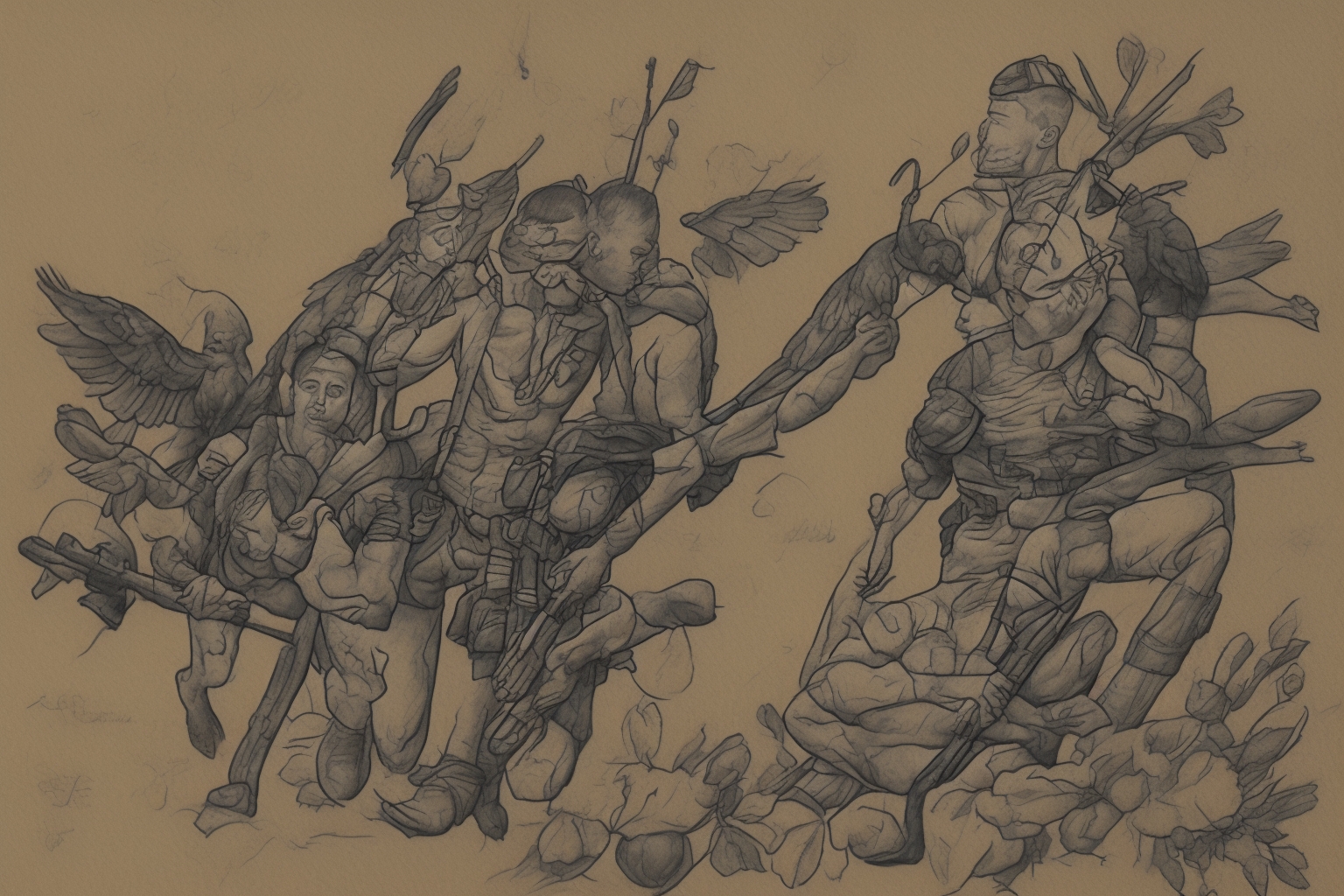
Ukraine's Ministry of Internal Affairs has introduced an online service aimed at identifying war casualties through tattoo sketches. This new feature is part of the 'Single Window for Citizens' portal, specifically within its 'Search' category.
Features of the Service
The initiative focuses on publishing sketches of tattoos found on unidentified bodies. According to Arthur Dobroserdov, the Commissioner for Missing Persons, the service is vital for the families of both soldiers and civilians who have gone missing during the ongoing conflict. Users can filter their searches based on tattoo categories, types, and body locations to find potential matches.
Tattoo Identification Process
Each tattoo sketch includes detailed information, such as sketch numbers, categories, types, and descriptions. For instance, a tattoo could be described as 'a Roman legionnaire helmet on the left shoulder.' The catalog will be updated regularly to incorporate data from recovery and repatriation operations.
Families who recognize tattoos matching those of missing persons are urged to report this information quickly. They can do so through the hotline number 1698 or via email, providing their name, contact details, and relevant information about the missing person, including sketch numbers and images.
Importance of the Service
This service represents a significant advancement in addressing the humanitarian crisis resulting from the conflict. It offers essential support to families who are searching for missing loved ones. By utilizing tattoo identification methods, authorities aim to streamline the identification process and bring closure to affected families.
Background and Development
The service could expedite the identification of war casualties, offering closure to families living with uncertainty. Techniques for reconstructing tattoos may also be beneficial when standard DNA identification is not an option.
The initiative was made possible through the 'Partnership for a Strong Ukraine' program, involving professional graphic designers to create the tattoo sketches. Officials highlight the importance of this service in restoring dignity to the remains of individuals who have died in the conflict, assuring families that their loved ones will be treated with respect during the identification process.
Source: Ukrinform UA
This report is maintained as a live newsroom article. Headlines and top paragraphs may be tightened when fresh reporting changes the clearest angle.
Newsletter
Get the next breaking Ukraine update
Receive the fastest lead, key facts, and follow-up links in one concise newsroom note.
Breaking format
The lead carries the core fact first.
Key figures and locations stay near the top.
Related coverage tracks the same reporting line.