News report
Ukraine Condemns Israeli Port's Acceptance of Stolen Grain
Ukrainian Foreign Minister Andrii Sybiha criticized Israel for permitting a Russian vessel carrying stolen grain to dock in Haifa. This statement was made during discussions with his Israeli counterpart, Gideon Saar.
Share this article
Share to social platforms, or copy the article link and share text manually.
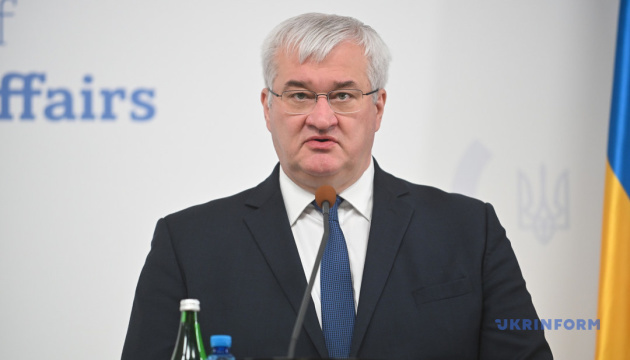
Photo: Ukrinform EN
At a glance
- Ukrainian FM Sybiha criticized Israel for allowing a Russian ship's docking.
- The ship, ABINSK, delivered 43,700 tons of stolen grain to Haifa.
- Sybiha emphasized the unacceptable nature of importing grain from occupied territories.
- Discussions included broader bilateral issues and security concerns.
- President Zelensky previously accused Israel of inconsistent relations regarding Russia.
Why it matters
The condemnation by Ukraine underscores the significant issue of illegal trade stemming from occupied territories. This incident draws international attention to the broader implications for Ukraine's sovereignty and its agricultural sector.
https://www.ukrinform.net/rubric-polytics/4112691-fm-sybiha-to-israeli-counterpart-importing-grain-from-occupied-ukrainian-territories-unacceptable-after-russian-vessel-docks-in-haifa.html
What Happened
Ukrainian Foreign Minister Andrii Sybiha addressed his Israeli counterpart, Gideon Saar, expressing strong disapproval of Israel’s decision to allow a Russian ship to dock at Haifa with stolen agricultural products from Ukraine. The talks occurred on April 15, 2026, and were reported on the social media platform X.
Key Details
Sybiha emphasized that the importation of grain from occupied Ukrainian territories is unacceptable. The Russian bulk carrier ABINSK, which entered Haifa on April 12, 2026, was reported to have delivered 43,700 tons of wheat claimed to be exported from these occupied areas.
The Ukrainian minister linked this illegal trade to Russia’s broader military strategy. During the discussions, he also mentioned ongoing bilateral issues, particularly highlighting security matters in the context of the Middle East.
The Ukrainian Foreign Minister noted the need for continued dialogue between Ukraine and Israel, especially regarding security. Despite the current tensions, both parties expressed mutual interest in advancing their bilateral relations.
Earlier in the week, journalist Kateryna Yaresko from the SeaKrime investigative project at the Myrotvorets Center reported that the illicit docking of the ABINSK sparked outrage within the Ukrainian government. President Volodymyr Zelensky had previously criticized Israeli Prime Minister Benjamin Netanyahu, accusing him of trying to maintain friendly relations with both Russia and Ukraine despite the geopolitical dynamics.
Why It Matters
Sybiha's condemnation reflects Ukraine's ongoing struggle against the illegal trade of its agricultural products. By calling attention to the situation, Ukraine seeks to highlight the repercussions of these actions on its territorial integrity and agricultural economy. The incident also puts pressure on Israel to reconsider its stance amid the complex geopolitical landscape.
Background
The conflict over the agricultural exports from occupied territories illustrates broader tensions stemming from Russia's invasion of Ukraine. The continued export of stolen Ukrainian grain feeds into Russia’s economic strategies while undermining Ukraine’s agricultural sector.
The global agricultural market is closely monitored, as these actions can have significant implications for food security and international support for Ukraine. Ukraine has been proactive in drawing attention to these violations, pressuring various governments to take a stand against illegal imports from occupied regions.
Source: Ukrinform EN
This report is maintained as a live newsroom article. Headlines and top paragraphs may be tightened when fresh reporting changes the clearest angle.
Newsletter
Get the next major Ukraine report
Follow the strongest verified developments with a cleaner newsroom brief and direct follow-up coverage.
Report format
Fast lead first, then fuller context.
Source photo stays distinct from any illustration.
Related coverage stays inside the same reporting thread.