Breaking news
Ukraine Calls for UN Security Council Meeting Amid Russian Attacks
Ukraine has requested the UN Security Council to convene in response to increased Russian shelling and a surge in civilian casualties. The appeal was made on April 14, 2026, by Ukraine's Permanent Representative to the UN, Andrii Melnyk.
Share this article
Share to social platforms, or copy the article link and share text manually.
Developing story
This page is updated as verified details move. The lead and top sections are tightened first when the clearest confirmed angle changes.
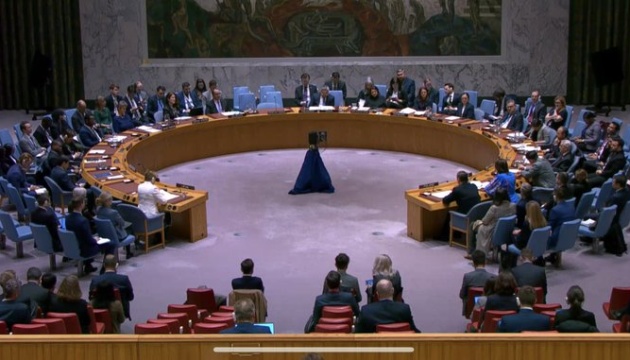
Photo: Ukrinform EN
At a glance
- Ukraine requested a UN Security Council meeting regarding Russian attacks.
- Ukrainian representative Melnyk reported 70 civilian deaths from Russian shelling.
- Over 3,600 drones and hundreds of bombs were launched by Russia in two weeks.
- Putin's Easter truce was broken with over 2,000 violations recorded.
- The Security Council meeting is scheduled for April 20.
Why it matters
The request for a UN Security Council meeting emphasizes the urgency of international attention on the escalating violence in Ukraine. Rising civilian casualties raise concerns about humanitarian conditions and the broader implications for regional stability.
https://www.ukrinform.net/rubric-polytics/4112555-ukraine-asks-un-security-council-to-hold-meeting-over-escalation-of-russian-attacks.html
What Happened
On April 14, 2026, Ukraine formally appealed to the UN Security Council, seeking to address the escalation of Russian military actions that have led to growing civilian casualties. This request was conveyed by Andrii Melnyk, Ukraine's Permanent Representative to the UN, to the current President of the Security Council, Jamal Fares Al-Ruwaei of Bahrain.
Key Details
Melnyk outlined in his communication that Russian forces have engaged in systemic attacks against civilians and essential infrastructure, utilizing missiles and attack drones. Over the preceding two weeks, Russian military activity has included the launch of over 3,600 attack UAVs, nearly 1,350 guided aerial bombs, and more than 40 missiles.
The result of this escalated aggression has been the deaths of at least 70 civilians. The letter from Melnyk also criticized the Kremlin's portrayal of itself as a peacemaker, particularly in relation to the brief "Easter truce" declared by President Vladimir Putin.
This truce was described as a mere ruse, quickly violated with over 2,000 ceasefire breaches documented within hours. Melnyk pointed out that during the Easter period, Russian forces not only continued their shelling but reportedly committed severe war crimes, which included killing four Ukrainian prisoners of war in the Kharkiv region and targeting an evacuation team in Zaporizhzhia.
In light of the heightened tensions, Melnyk’s request for a Security Council meeting falls under the agenda item focused on the "Maintenance of peace and security of Ukraine." The Council's secretariat has confirmed that this meeting is slated for April 20.
Why It Matters
The requested meeting underscores Ukraine's urgent need for international support amid ongoing aggression. With civilian casualties increasing, the actions of the UN Security Council could play a critical role in addressing the escalating violence and initiating discussions for a ceasefire.
Background
Throughout the conflict, Ukraine has signaled a willingness to engage in negotiations for a sustainable ceasefire. However, Melnyk remarked that Russia has shown no genuine intent to pursue peace in a constructive manner.
The ongoing situation is exacerbated by Russia's collaborations with nations like Iran, which is perceived to be further destabilizing the region while enabling Russia to increase its military capabilities against Ukraine.
Source: Ukrinform EN
This report is maintained as a live newsroom article. Headlines and top paragraphs may be tightened when fresh reporting changes the clearest angle.
Newsletter
Get the next breaking Ukraine update
Receive the fastest lead, key facts, and follow-up links in one concise newsroom note.
Breaking format
The lead carries the core fact first.
Key figures and locations stay near the top.
Related coverage tracks the same reporting line.