News report
Ukraine Urges Venice Biennale to Reconsider Russia's Involvement
Foreign Minister Dmytro Kuleba and Culture Minister Oleksandr Tkachenko are urging the Venice Biennale to reconsider Russia's participation, citing cultural preservation.
Share this article
Share to social platforms, or copy the article link and share text manually.
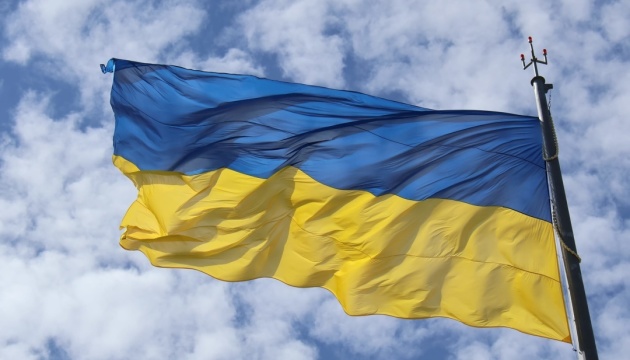
Photo: Ukrinform UA
At a glance
- Ukraine urges Venice Biennale to reject Russia's participation.
- Russia systematically destroys Ukrainian cultural heritage since 2014.
- 346 artists and 132 media professionals have died as a result of the conflict.
- Russian cultural participation linked to military and political agendas.
- Maintaining cultural neutrality protects against state propaganda.
Why it matters
The inclusion of Russian representatives in international cultural events could undermine support for Ukraine amid ongoing aggression. Preserving the integrity of cultural platforms is crucial for presenting a unified stance against wartime atrocities.
https://www.ukrinform.ua/rubric-culture/4099290-ukraina-zaklikala-organizatoriv-venecijskoi-bienale-pereglanuti-risenna-sodo-povernenna-rf.html
Official Appeal
Ukraine's Foreign Minister Dmytro Kuleba and Minister of Culture Oleksandr Tkachenko have formally urged the Venice Biennale organizers to reject Russia's participation. Their statement reflects growing concerns about normalizing Russia's military actions amid ongoing conflict.
Cultural Destruction
The plea follows reports of Russia opening a national pavilion at the upcoming Biennale. Ukrainian officials highlighted that cultural losses have been extensive due to Russia's aggression. Since 2014, the destruction of cultural heritage sites in Ukraine has violated international humanitarian law, particularly the Hague Convention.
Since February 2022, Russia's full-scale invasion has led to the deaths of at least 346 artists and 132 media workers, including foreign nationals. Furthermore, Russian forces have damaged over 1,700 cultural heritage sites and more than 2,500 cultural infrastructure objects in Ukraine, with 558 completely destroyed.
Implications of Participation
Ukrainian leaders argue that allowing Russian representatives at international cultural events sends a troubling message about the legitimacy of the war. They recalled that on February 27, 2022, the Biennale organizers condemned Russia’s actions and expressed support for peace.
Background
Concerns
The current calls for Russian inclusion in the Biennale are seen as contradictory, given ongoing hostilities and Russia's refusal to engage in peaceful negotiations. Ukrainian officials noted that Russian culture is closely linked to the militaristic regime currently in power, raising questions about the nature of cultural representations.
Concerns also emerged about the appointed commissioner for the Russian pavilion, Anastasia Karneeva, and her ties to Russia's military-industrial complex. Such connections suggest that cultural narratives in Russia are often tied to state propaganda.
The Ukrainian government insists that the global arts community should adhere to values of freedom, human dignity, and international law, emphasizing solidarity with a culture under threat.
Source: Ukrinform UA
This report is maintained as a live newsroom article. Headlines and top paragraphs may be tightened when fresh reporting changes the clearest angle.
Newsletter
Get the next major Ukraine report
Follow the strongest verified developments with a cleaner newsroom brief and direct follow-up coverage.
Report format
Fast lead first, then fuller context.
Source photo stays distinct from any illustration.
Related coverage stays inside the same reporting thread.