News update
Ukraine and Netherlands Discuss Economic Cooperation Areas
Ukrainian Vice Prime Minister Taras Kachka identified promising sectors for economic collaboration with the Netherlands. He outlined the potential in agriculture, energy, logistics, and more.
Share this article
Share to social platforms, or copy the article link and share text manually.
Developing story
This page is updated as verified details move. The lead and top sections are tightened first when the clearest confirmed angle changes.
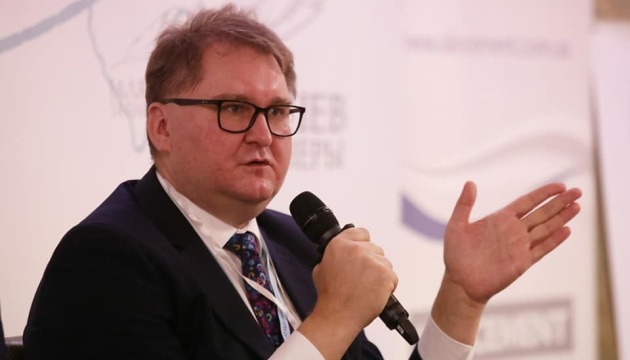
Photo: Ukrinform UA
At a glance
- Taras Kachka identified agriculture and energy as key cooperation sectors.
- Ukrainian agricultural success relies heavily on Dutch technologies.
- The Lviv Conference aimed at deepening bilateral relations for EU integration.
- Negotiations cover practical projects and long-term partnerships.
- Investment conditions and regulatory clarity are prioritized for business.
Why it matters
Strengthening economic cooperation between Ukraine and the Netherlands could significantly advance Ukraine's recovery efforts and integration into European markets. Enhanced partnerships in agriculture and energy address both immediate needs and long-term development goals amid ongoing geopolitical challenges.
https://www.ukrinform.ua/rubric-economy/4108454-kacka-nazvav-perspektivni-galuzi-dla-rozsirenna-ekonomicnoi-spivpraci-miz-ukrainou-ta-niderlandami.html
What Happened
On April 2, 2026, Vice Prime Minister Taras Kachka discussed areas of economic collaboration between Ukraine and the Netherlands. He provided comments to Ukrinform outlining sectors where the two countries could engage mutually beneficially.
Key Details
Kachka singled out several sectors where cooperation promises to yield significant results. He emphasized agriculture as a primary area, noting that Ukraine and the Netherlands complement rather than compete with each other in this field.
He pointed out that Ukrainian agricultural success relies heavily on Dutch technologies, knowledge, equipment, and financial instruments. This synergy is already fostering shared value chains in the agricultural sector.
Energy is another critical area highlighted by Kachka. He noted the need for solutions that ensure resilience amid ongoing conflict and longer-term transformation and recovery efforts.
Kachka mentioned logistics, infrastructure, technology, innovation, and financial mechanisms as vital components of the collaboration that can support rebuilding and development in Ukraine. He reaffirmed the presence of Dutch businesses in Ukraine and set forth the goal of broadening and deepening this partnership.
The recent 'Lviv Conference' held in Breda, Netherlands, was framed by Kachka as an event focused on enhancing bilateral relations in the context of Ukraine's EU membership aspirations. This conference addressed various sectors of mutual interest, also crucial for meeting EU membership criteria, including the rule of law, institutional capability, agricultural policy, and energy.
Kachka stressed the significance of demonstrating tangible reform progress to EU member states, particularly the Netherlands. He underlined that the conference serves as a mechanism to build trust, articulate Ukraine's advancements, align future steps, and solidify support for Ukraine's EU membership journey.
He noted specific efforts aimed at enhancing the rule of law, strengthening institutions, and exchanging expertise as essential elements of building the necessary trust among EU partners and the business community. The negotiations cover a wide array of sectors, seeking to turn agreements into actionable projects and long-term partnerships.
In the agricultural field, discussions involve implementing EU standards, developing sectoral strategies, and fostering innovation. In the energy sector, regional resilience remains a pressing concern, while long-term solutions are also in focus, encompassing investment and scalable technologies.
Lastly, Kachka emphasized the importance of addressing the business aspects of cooperation, advocating for favorable conditions for investments by creating a better investment climate. This includes reducing risks and providing clearer regulations for businesses.
He envisions a gradual deepening of cooperation across multiple sectors, facilitating the development of lasting partnerships between Ukraine and the Netherlands.
Why It Matters
Strengthening economic cooperation between Ukraine and the Netherlands could significantly advance Ukraine's recovery efforts and integration into European markets. Enhanced partnerships in agriculture and energy address both immediate needs and long-term development goals amid ongoing geopolitical challenges.
Background
The dialogue between Ukraine and the Netherlands comes at a crucial time as Ukraine continues to seek integration with the European Union. The Dutch government previously expressed willingness to support Ukraine's rebuilding efforts and facilitate investments that align with Ukraine's strategic goals for recovery and reform.
Source: Ukrinform UA
This report is maintained as a live newsroom article. Headlines and top paragraphs may be tightened when fresh reporting changes the clearest angle.
Newsletter
Get the next Ukraine update
Track the latest policy, diplomacy, aid, and security changes without losing the thread.
Update format
This template prioritizes developments over recap.
Context stays short and tied to the current turn in the story.
The page is designed for repeat readers checking what changed.