News report
Ukraine Charges Russia with Chemical Weapons Use at OPCW Meeting
Ukraine's delegation has accused Russia of systematic chemical weapons usage, reporting over 12,500 incidents. The claims were made during the recent OPCW session.
Share this article
Share to social platforms, or copy the article link and share text manually.
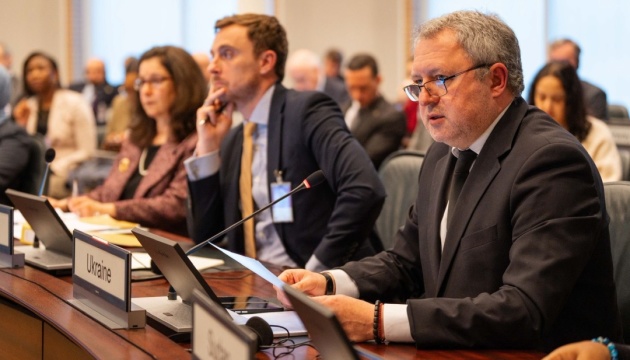
Photo: Ukrinform EN
At a glance
- Ukraine accused Russia of systematic use of chemical weapons during OPCW session.
- Over 12,500 incidents involving Russian chemical munitions have been documented.
- Call for accountability received support from several European nations.
- Use of unmanned aerial vehicles for chemical delivery noted as a new trend.
- Ukraine reaffirmed commitment to Chemical Weapons Convention principles.
Why it matters
These allegations against Russia signify a serious escalation in the use of chemical weapons in warfare, which poses significant threats to international security. The international community's response will be crucial in addressing not only Russia's actions but also in reinforcing the global ban on chemical weapons.
https://www.ukrinform.net/rubric-polytics/4101376-ukraine-accuses-russia-of-systematic-chemical-weapons-use-at-opcw-session.html
What Happened
During the 111th session of the OPCW Executive Council from March 10 to 13, Ukraine raised serious allegations about Russia's use of chemical weapons in its military operations. The Ukrainian delegation documented over 12,500 incidents involving the use of Russian chemical munitions.
The Ukrainian Embassy in the Netherlands commented that these actions are violations of international law and pose risks to the global non-proliferation regime. As the conflict nears its fourth year, these claims are increasingly critical.
Key Details
Ukrainian representatives emphasized that the systematic use of chemical weapons not only threatens immediate battlefield conditions but could also compromise broader international security. Andriy Kostin, head of the Ukrainian delegation, urged for the OPCW to implement effective mechanisms to identify and hold accountable those involved in chemical weapons use.
The session highlighted new methods for delivering chemical agents, including the use of drones to spread chemicals over enemy positions. This development alarmed international observers and human rights organizations.
Background
Ukraine's demand for accountability aligns with support from several European nations, including France, Germany, the Netherlands, Sweden, and the United Kingdom, all advocating for repercussions for Russia’s actions. The delegation recalled previous examples of Russia's use of chemical agents, notably the Skripal and Navalny poisonings, reinforcing claims of Russia’s violations of international conventions on chemical weapons.
During the session, Ukraine secured its position on the OPCW Executive Council, while Russia faced its third consecutive defeat in re-election efforts. This outcome reflects a shift in global perspectives regarding the ongoing conflict.
Source: Ukrinform EN
This report is maintained as a live newsroom article. Headlines and top paragraphs may be tightened when fresh reporting changes the clearest angle.
Newsletter
Get the next major Ukraine report
Follow the strongest verified developments with a cleaner newsroom brief and direct follow-up coverage.
Report format
Fast lead first, then fuller context.
Source photo stays distinct from any illustration.
Related coverage stays inside the same reporting thread.