Breaking news
SBU Charges Russian Colonel Over Attack on Burshtyn TPP
The Security Service of Ukraine (SBU) has announced charges against Russian Colonel Marat Tsevelev for orchestrating a missile and drone attack on the Burshtyn Thermal Power Plant in January 2026. This revelation was reported by Ukrinform.
Share this article
Share to social platforms, or copy the article link and share text manually.
Developing story
This page is updated as verified details move. The lead and top sections are tightened first when the clearest confirmed angle changes.
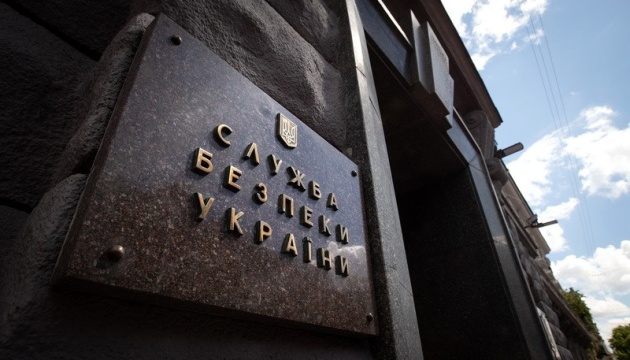
Photo: Ukrinform UA
At a glance
- SBU charges Russian Colonel Marat Tsevelev for organizing attacks.
- Tsevelev recruited a local teen to assist in reconnaissance.
- The attacks targeted the Burshtyn TPP and surrounding critical infrastructure.
- Evidence of the espionage was documented by the SBU.
- The case against the minor has been forwarded to court for treason.
Why it matters
The charges against Tsevelev highlight the ongoing risk of targeted strikes on Ukraine's energy infrastructure amid the conflict with Russia. These attacks pose significant threats to local populations, disrupting essential services.
https://www.ukrinform.ua/rubric-ato/4113766-sbu-zaocno-ogolosila-pidozru-rosijskomu-pidpolkovniku-za-organizaciu-udaru-po-burstinskij-tes.html
What Happened
The SBU has officially charged Marat Tsevelev, a colonel in the Russian military intelligence service (GRU), for his role in a planned missile and drone strike against the Burshtyn Thermal Power Plant (TPP) located in western Ukraine. This attack was part of a broader offensive that began in January 2026, and the charges were made public on April 18, 2026.
Key Details
According to the investigation, Tsevelev coordinated the preparation of these strikes, which targeted not only the Burshtyn TPP but also critical defense structures and key electrical substations in the region. To assist in the operation, Tsevelev allegedly recruited a local 17-year-old graduate from a technical school, who sought quick earnings through Telegram channels.
The minor's involvement included gathering reconnaissance and technical information about the energy facilities following previous assaults. The SBU documented how the recruited agent initially conducted surveillance around the TPP and an adjacent electrical substation.
Under Tsevelev's directions, she was instructed to photograph and video record these objects and pinpoint their geolocation on Google Maps. Following this reconnaissance phase, she was tasked with consolidating the information and sending it back to Tsevelev via messaging apps.
SBU operatives uncovered this espionage activity and traced the communications between the minor and Tsevelev. In early 2026, the security service apprehended the young woman as she attempted to photograph military assets, seizing her smartphone which contained evidence of her activities.
Tsevelev, serving with the 317th Marine Special Operations Center of the GRU based in the temporarily occupied Sevastopol, was charged under Article 114 of the Ukrainian Criminal Code for espionage. The case against the agent was forwarded to the court under Article 111, which deals with treason committed during martial law conditions.
The Burshtyn TPP had previously suffered attacks on February 7, 2026, leading to significant disruptions in heating and water supply in the city.
Why It Matters
The charges against Tsevelev highlight the ongoing risk of targeted strikes on Ukraine's energy infrastructure amid the conflict with Russia. These attacks pose significant threats to local populations, disrupting essential services.
Background
The Burshtyn TPP serves as a critical component of Ukraine's energy grid. Since the onset of the conflict, Russian forces have consistently targeted energy installations, aiming to weaken Ukraine's electricity supply system.
The SBU's efforts to counter these espionage activities represent a crucial aspect of maintaining national security, especially with the involvement of local agents under duress or influence. This incident places further scrutiny on the GRU's operations and their impact on the conflict dynamics within Ukraine's borders.
Source: Ukrinform UA
This report is maintained as a live newsroom article. Headlines and top paragraphs may be tightened when fresh reporting changes the clearest angle.
Newsletter
Get the next breaking Ukraine update
Receive the fastest lead, key facts, and follow-up links in one concise newsroom note.
Breaking format
The lead carries the core fact first.
Key figures and locations stay near the top.
Related coverage tracks the same reporting line.