Breaking news
Russian Forces Launch 55 Attacks on Ukrainian Positions
On April 12, Russian military forces launched 55 attacks against Ukrainian positions. The most intense activity was reported in the Pokrovsk and Kostiantynivka directions, according to the Ukrainian Armed Forces.
Share this article
Share to social platforms, or copy the article link and share text manually.
Developing story
This page is updated as verified details move. The lead and top sections are tightened first when the clearest confirmed angle changes.
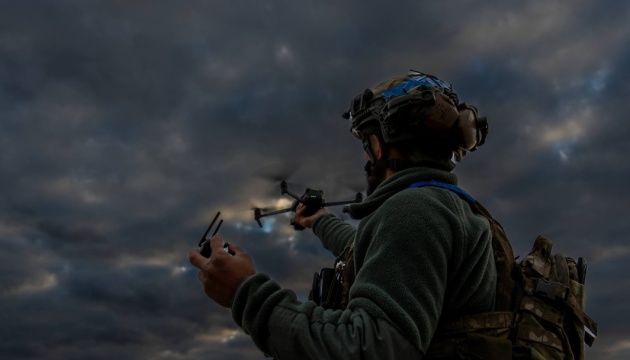
Photo: Ukrinform UA
At a glance
- Russian troops launched 55 attacks on Ukrainian positions on April 12.
- The highest frequency of attacks occurred in the Pokrovsk direction, with 14 incidents.
- 11 attacks were reported near Kostiantynivka, highlighting active combat operations.
- Shelling incidents impacted civilian areas in the North-Slobozhansky and Kursky regions.
- Ongoing assaults indicate a persistent Russian effort to advance in multiple directions.
Why it matters
The series of attacks highlights the relentless pressure exerted by Russian forces on Ukrainian defenses. Understanding this military activity is crucial for evaluating security dynamics in the region and potential shifts in the conflict's trajectory.
https://www.ukrinform.ua/rubric-ato/4111724-rosiani-vid-pocatku-dobi-zdijsnili-55-atak-najbilse-na-pokrovskomu-napramku.html
What Happened
Since the start of the day on April 12, Russian forces have executed 55 attacks against Ukrainian defenses. The General Staff of the Armed Forces of Ukraine reported this activity, detailing specific locations and the nature of the assaults.
Key Details
The attacks were most concentrated in the Pokrovsk direction, comprising 14 individual assaults targeted at areas like Bilytske, Rodynske, Myrnohrad, Zatyshe, Hryshyne, Pokrovsk, Udachny, Molodetske, Muravke, and Novopavlivka. At least one of these assaults is still ongoing.
In the Kostiantynivka area, the Russian forces conducted 11 attacks near Kostiantynivka, Pleshchiyivka, Illinivka, Novopavlivka, and Kucherevyy Yar, with ongoing combat operations reported. Russian military activity was also noted in several other regions: - In the North-Slobozhansky and Kursky directions, there were nine instances of shelling against civilian areas and Ukrainian defenders.
- Seven attempts were made by Russian troops to improve their positions in the South-Slobozhansky direction, specifically in Synelnykove, Starytsia, Izbytske, and Vovchansk. - In Kupiansk, Russian forces initiated two assault actions, particularly around Petropavlivka and Podoliv, with an ongoing attack.
- The Liman direction saw Ukrainian defenders repel two Russian advances, while the Sloviansk direction experienced four attacks aimed at Ozerne, Kalyniky, and Rai-Oleksandrivka. In the Kramatorsk direction, one attack occurred near Markove.
Why It Matters
These ongoing assaults indicate a sustained effort by Russian forces to gain ground in contested areas. The high number of attacks underscores the continuous pressure on Ukrainian defenses, reflecting the broader strategic objectives in the region. This sustained military activity may impact local and international responses to the ongoing conflict.
Background
As of April 12, Russian troops have reportedly violated ceasefire conditions nearly 2,300 times since the outbreak of hostilities. The General Staff of the Armed Forces continues to monitor and report on these incursions, emphasizing the ongoing conflict's intensity and the resilient response from Ukrainian forces.
The situation remains dynamic, with the Ukrainian military focusing on exhausting Russian capabilities along the front lines. The ongoing military situation requires attention due to its implications for security dynamics in Ukraine and potential ramifications for regional stability.
Continued assessments are essential for understanding the evolving landscape of the conflict.
Source: Ukrinform UA
This report is maintained as a live newsroom article. Headlines and top paragraphs may be tightened when fresh reporting changes the clearest angle.
Newsletter
Get the next breaking Ukraine update
Receive the fastest lead, key facts, and follow-up links in one concise newsroom note.
Breaking format
The lead carries the core fact first.
Key figures and locations stay near the top.
Related coverage tracks the same reporting line.