News report
Russia Warns Putin on Unsustainable Military Spending Amid Ukraine War
Russian officials have cautioned President Vladimir Putin regarding the rising cost of his military campaign in Ukraine. According to Bloomberg, these concerns were highlighted by senior figures in Russia's Ministry of Economy and Central Bank.
Share this article
Share to social platforms, or copy the article link and share text manually.
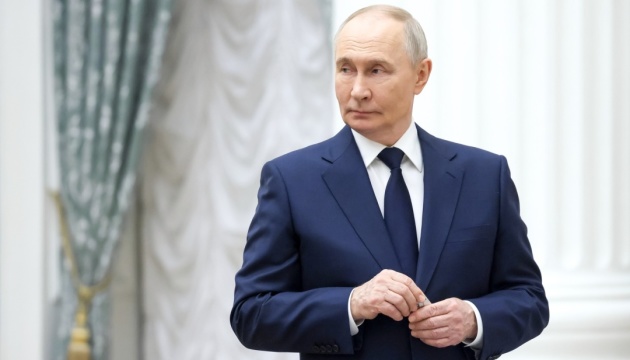
Photo: Ukrinform UA
At a glance
- Russian officials warn of unsustainable military spending amid Ukraine war.
- Current military expenditures threaten to increase state budget deficit.
- Division among Kremlin officials on whether to cut defense funding.
- Putin has asked for budget cuts in other areas before reducing military spending.
- Projected military funding deficit could reach 3 trillion rubles this year.
Why it matters
Growing military expenditures threaten Russia's economic stability amidst the ongoing conflict. Cuts in defense spending could destabilize sectors reliant on military contracts, impacting both defense capabilities and broader economic health.
https://www.ukrinform.ua/rubric-world/4129448-putina-poperedili-so-vitrati-na-vijnu-proti-ukraini-staut-neprijnatno-visokimi-bloomberg.html
What Happened
High-ranking officials from Russia's Ministry of Economy and Central Bank have warned President Vladimir Putin about the unacceptable levels of military spending due to the ongoing war in Ukraine. As reported by Bloomberg, this information comes from sources familiar with discussions within the Kremlin.
Budgetary pressures are mounting as the current planned expenditures threaten to exacerbate the state budget deficit.
Key Details
Officials from the Ministry of Finance and Central Bank informed key Kremlin figures that ongoing military expenditures present a dangerous challenge to fiscal stability. They have suggested that there is a need for cuts in defense spending.
However, a division among politicians exists, with some officials in the Ministry of Defense and others within the Kremlin lobbying to maintain military budgets, fearing that reductions could harm the economy, which relies heavily on military contracts. The discussions took place amid concerns that any attempt to reduce military funding could damage economic sectors linked to defense production.
To mitigate the fiscal imbalance, President Putin has requested that the Ministry of Finance explore possible budget cuts in other areas before impacting defense spending. The officials anticipate a need to increase military funding to cover projected deficits, which could reach 3 trillion rubles (approximately $36 billion) this year.
Budgetary preparations for 2026 were made under the assumption that the latter half of the year could see a funding shortfall of 1.2 to 1.5 trillion rubles, which will be essential for covering defense sector needs. Discussions regarding potential budget cuts have continued both before and after the onset of increased military actions, notably due to the ongoing U.S.-Israel conflict.
Why It Matters
The warnings from Russian officials illuminate the growing strain on the country's economy as it continues to fund military operations in Ukraine. The potential inability to sustain current military expenditure levels could impact not only Russia's military capabilities but also sectors of the economy that rely on defense contracts, highlighting the complex balance between military imperatives and economic realities.
Background
Russia's engagement in Ukraine has necessitated significant military spending, which has now raised concerns about the sustainability of national finances. The conflicting interests within the Kremlin regarding military budgeting reflect broader uncertainties about the war's economic impact.
As the conflict endures, the tension between military objectives and economic constraints will likely intensify, compelling the Kremlin to make difficult decisions about resource allocation in the coming years.
Source: Ukrinform UA
This report is maintained as a live newsroom article. Headlines and top paragraphs may be tightened when fresh reporting changes the clearest angle.
Newsletter
Get the next major Ukraine report
Follow the strongest verified developments with a cleaner newsroom brief and direct follow-up coverage.
Report format
Fast lead first, then fuller context.
Source photo stays distinct from any illustration.
Related coverage stays inside the same reporting thread.