News report
Russia Leverages Intelligence Sharing with Iran Against Ukraine
An analysis reveals that Russia is utilizing its intelligence cooperation with Iran to reinforce military strategies against Ukraine, complicating the geopolitical landscape for the West.
Share this article
Share to social platforms, or copy the article link and share text manually.
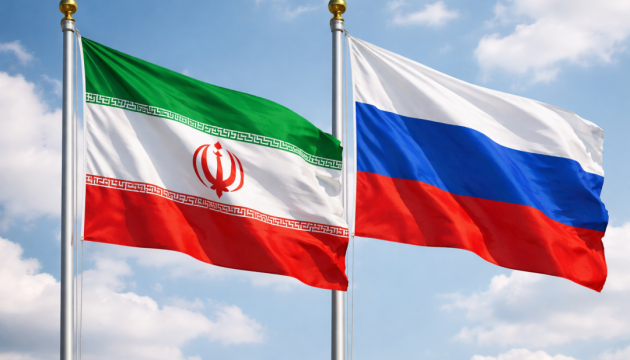
Photo: Ukrinform UA
At a glance
- Moscow is reportedly leveraging intelligence sharing with Iran as a bargaining chip in the Ukraine conflict.
- Kirill Dmitriev offered to halt intelligence exchange with Iran if the U.S. did the same with Ukraine, a proposal rejected by U.S. officials.
- Russia is supplying Iran with military support, including satellite imagery and drone technology, aimed at U.S. and Israeli forces.
- Elevated tensions have resulted in Iranian attacks on U.S. bases following U.S.-Israeli strikes on Iranian targets.
- The alignment between Moscow and Tehran complicates the geopolitical landscape in the Middle East and impacts global security concerns.
Why it matters
The intelligence exchange between Russia and Iran represents a significant escalation in their alliance, potentially altering the dynamics in the Middle East and impacting U.S. military operations. This relationship could also hinder efforts to stabilize Ukraine amid the ongoing conflict.
https://www.ukrinform.ua/rubric-world/4104105-moskva-namagaetsa-vikoristati-obmin-rozviddanimi-z-iranom-ak-rozminnu-monetu-u-vijni-proti-ukraini-isw.html
Intelligence Exchange Between Russia and Iran

Recent reports indicate that Moscow is enhancing its military objectives in Ukraine by forming an intelligence-sharing arrangement with Tehran, according to the Institute for the Study of War (ISW). High-ranking officials from both Russia and Iran are increasingly engaged in this strategic partnership, focusing on countering Western influence in the region.
Controversial Propositions
During a meeting on March 11 in Miami, Kirill Dmitriev, head of the Russian Direct Investment Fund, suggested that Russia might cease intelligence sharing with Iran if the United States stopped its intelligence exchange with Ukraine. This proposal was firmly rejected by the U.S. delegation, which reaffirmed Washington's commitment to supporting Kyiv.
Ongoing Russian Proposals to the U.S.
Russia’s attempts to renegotiate U.S. intelligence cooperation with Ukraine are part of a broader pattern. Reports indicate that Russian officials have presented various proposals to the U.S.
regarding Iran, including discussions about transferring enriched uranium to Russia. However, U.S. officials have consistently dismissed these initiatives, reflecting ongoing tensions between the two nations.
Military Backing for Iran
The Wall Street Journal reports that Russia is supplying Iran with satellite imagery, drone technology, and advisory support oriented toward U.S. and Israeli forces in the Middle East. This collaboration significantly impacts military operations in the region.
In response to coordinated strikes by the U.S. and Israel on Iranian sites on February 28, Iran retaliated with attacks on American installations in Kuwait, the UAE, Qatar, Bahrain, and Jordan. These events illustrate the complexities of regional conflicts where Russian and Iranian interests align against a shared adversary, the United States.
Geopolitical Implications
Russia's intelligence activities demonstrate an increasing alignment with Tehran, reflecting urgent geopolitical maneuvers amid the ongoing conflict with Ukraine. Such developments may complicate U.S. military operations in the Middle East and exacerbate an already volatile situation.
Source: Ukrinform UA
This report is maintained as a live newsroom article. Headlines and top paragraphs may be tightened when fresh reporting changes the clearest angle.
Newsletter
Get the next major Ukraine report
Follow the strongest verified developments with a cleaner newsroom brief and direct follow-up coverage.
Report format
Fast lead first, then fuller context.
Source photo stays distinct from any illustration.
Related coverage stays inside the same reporting thread.