Breaking news
Russia to Intensify Hybrid Attacks on EU and NATO, Official Warns
Russia plans to ramp up its information and hybrid attacks against the European Union and NATO. Andriy Kovalенко of Ukraine's Center for Counteracting Disinformation reported this on April 18, 2026.
Share this article
Share to social platforms, or copy the article link and share text manually.
Developing story
This page is updated as verified details move. The lead and top sections are tightened first when the clearest confirmed angle changes.
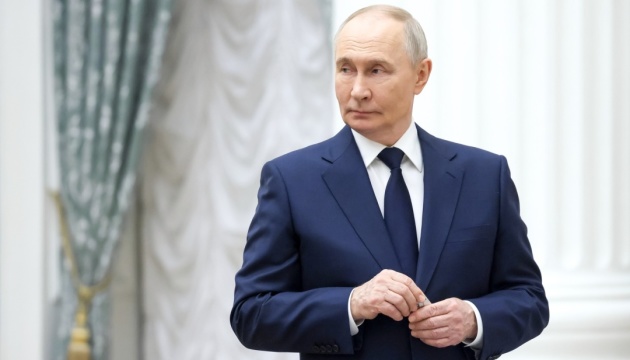
Photo: Ukrinform UA
At a glance
- Russia to boost information and hybrid attacks on EU and NATO.
- Putin advised by intelligence chief on vulnerabilities of Western alliances.
- Upcoming provocations may test EU and NATO's unity on supporting Ukraine.
- Kovalensko labels Russia's strategies as outdated and ineffective.
- Heightened threats could reshape the geopolitical landscape in Europe.
Why it matters
Russia's planned hybrid attacks aim to erode support for Ukraine from the EU and NATO. Such tactics could complicate European political stability and security responses in the region.
https://www.ukrinform.ua/rubric-world/4113553-putina-perekonali-so-same-zaraz-e-mozlivist-hitati-es-ta-nato-sob-zmensiti-pidtrimku-ukraini-cpd.html
What Happened
Russia is set to intensify its hybrid strategies aimed at undermining support for Ukraine from the European Union and NATO. According to Andriy Kovalенко, head of the Center for Counteracting Disinformation at Ukraine's National Security and Defense Council, this shift follows advice given to President Vladimir Putin regarding current vulnerabilities in Western alliances.
Kovalенко disclosed that Russian intelligence chief Sergey Naryshkin convinced Putin that now is an opportune moment to ‘shake’ EU and NATO resolve through strategic threats. He warned that Russia plans to execute a series of information and hybrid provocations intended to provoke reactions that could reduce Western backing for Ukraine.
Key Details - The announcement comes amid Russia considering multiple scenarios for its ongoing conflict with Ukraine, including prolonged military engagement and attempts to freeze the current situation. - Kovalенко characterized these tactics as outdated strategies that reflect Russia's lack of readiness to deal with advancing technological threats.
- The Center for Counteracting Disinformation indicated that upcoming provocations might target both political stability within the EU and NATO's military alliances. - Experts suggest that Russia’s exposed vulnerabilities, referred to as a 'sieve with numerous targets,' may reduce the effectiveness of these planned attacks.
- The geopolitical context includes ongoing military tensions, with potential implications for European security architecture.
Why It Matters
The escalation of hybrid attacks signifies a strategic shift by Russia aimed at weakening Western alliances supporting Ukraine. Heightened threats to EU and NATO could impact international diplomatic efforts and military support for Ukraine.
Background
In recent months, tensions between Russia and Western alliances have escalated, with various military operations and cyber threats accentuating the security landscape in Europe. The Kremlin has reportedly considered several strategies to maximize its leverage, including both prolonged military campaigns and initiatives targeting NATO countries directly.
This evolving scenario presents complex challenges for European security and resilience against hybrid warfare tactics employed by Russia.
Source: Ukrinform UA
This report is maintained as a live newsroom article. Headlines and top paragraphs may be tightened when fresh reporting changes the clearest angle.
Newsletter
Get the next breaking Ukraine update
Receive the fastest lead, key facts, and follow-up links in one concise newsroom note.
Breaking format
The lead carries the core fact first.
Key figures and locations stay near the top.
Related coverage tracks the same reporting line.