News report
Russia Claims Ukraine Responsible for Environmental Damage in Occupied Regions
The Center for Countering Disinformation has documented claims from Russia that Ukraine caused environmental harm in occupied areas. This narrative is designed to divert accountability from Russia.
Share this article
Share to social platforms, or copy the article link and share text manually.
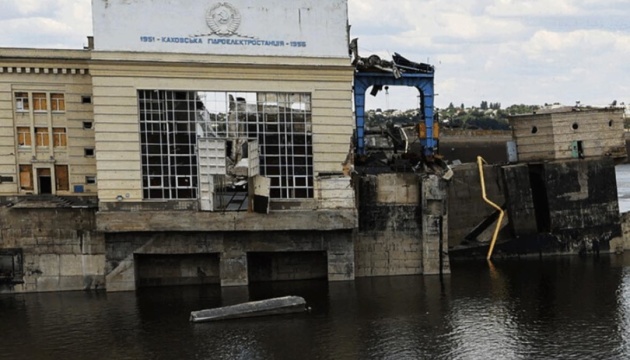
Photo: Ukrinform UA
At a glance
- Russia claims Ukraine is responsible for environmental damage in occupied areas.
- A report acknowledges war-induced ecological harm yet shifts blame to Ukraine.
- The report describes Russian 'restorative activities' in occupied territories.
- The Center for Countering Disinformation highlights the manipulation in these claims.
- Military actions are cited as direct causes of environmental destruction.
Why it matters
This rhetoric emphasizes an ongoing strategy by Russian authorities to deflect blame for ecological damage. Understanding these manipulative narratives is crucial for accountability in international contexts.
https://www.ukrinform.ua/rubric-society/4106450-rosia-perekladae-vidpovidalnist-za-znisenu-prirodu-na-zahoplenih-neu-teritoriah-na-ukrainu-cpd.html
What Happened
Russian authorities are attributing environmental destruction in occupied territories to Ukraine, as detailed in a report from the Center for Countering Disinformation. This statement is part of a so-called 'white paper' discussing the ecological conditions in these areas.
Key Details
The report, described as the first comprehensive assessment of ecological damage since the post-Soviet era, acknowledges significant environmental harm resulting from the ongoing conflict. It addresses issues such as deforestation, soil degradation, water pollution, and the loss of protected areas, yet primarily shifts responsibility onto Ukraine.
Despite recognizing the degradation, the report claims that Russia is engaging in 'restorative activities' in these regions. The Center for Countering Disinformation has criticized this stance as a manipulation of facts, arguing that the primary cause of ecological damage is Russia's military actions.
Military operations, including combat, shelling, and the destruction of vital infrastructure, directly contribute to environmental issues, according to the Center. The framing of this report appears to be a broader effort to divert attention from the detrimental consequences of Russian military operations.
Background
The conflict has led to considerable environmental damage and significant economic losses for Ukraine. Legal challenges have arisen, including one related to the destruction of the Oskil Reservoir dam by Russian forces early in the conflict. These factors emphasize the urgent need for accountability and recovery amid ongoing hostilities.
Understanding the environmental impact of the conflict is essential for the international community, with implications that extend beyond Ukraine's recovery to global environmental governance in conflict zones.
Source: Ukrinform UA
This report is maintained as a live newsroom article. Headlines and top paragraphs may be tightened when fresh reporting changes the clearest angle.
Newsletter
Get the next major Ukraine report
Follow the strongest verified developments with a cleaner newsroom brief and direct follow-up coverage.
Report format
Fast lead first, then fuller context.
Source photo stays distinct from any illustration.
Related coverage stays inside the same reporting thread.