News report
Russia Initiates Legal Case Against Ukraine and Netherlands Over Scythian Gold
The legal proceedings focus on the Scythian gold collection returned to Ukraine after a Dutch court ruling, amidst cultural and political tensions over Crimea.
Share this article
Share to social platforms, or copy the article link and share text manually.
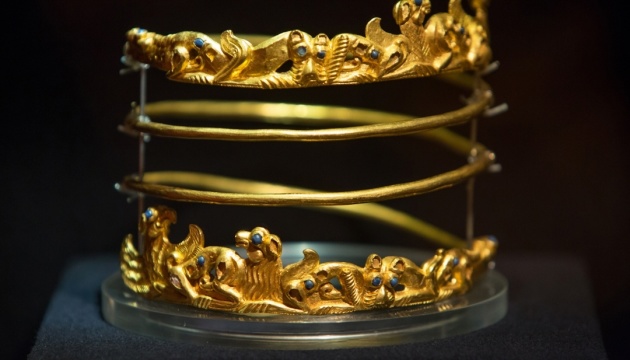
Photo: Ukrinform UA
At a glance
- Russia has opened a criminal case regarding Scythian gold returned to Ukraine.
- The gold collection was ruled by Dutch courts to belong to Ukraine in 2021 and 2023.
- Russian authorities claim the artifacts were unlawfully retained by Ukraine and the Netherlands.
- The case highlights the tension in cultural heritage ownership amid the ongoing conflict.
- The collection is estimated to be worth over 117 million rubles.
Why it matters
This legal action reflects the ongoing cultural and political struggles stemming from Russia's annexation of Crimea. The outcome could influence future attitudes towards cultural restitution and heritage laws in conflict situations.
https://www.ukrinform.ua/rubric-culture/4100904-rosia-porusila-spravu-proti-ukraini-ta-niderlandiv-za-vikradenna-skifskogo-zolota-z-krimu.html
What Happened

On March 11, the Russian Investigative Committee announced a criminal case against Ukraine and the Netherlands for allegedly stealing Scythian gold from Crimea.
The case revolves around the Scythian gold collection, returned to Ukraine following a Dutch court ruling in 2023. Russian officials argue that the Allard Pierson Museum in Amsterdam as well as officials from both countries unlawfully retained the collection, claiming this constitutes a crime involving organized groups appropriating culturally significant items from their rightful location.
Russian authorities maintain that all cultural artifacts from Crimea came under its ownership following the peninsula's annexation.
Key Details
Svetlana Petrenko, a spokesperson for the Investigative Committee, reiterated the Russian position that these artifacts have historical ties to Crimean museums. By returning the Scythian gold to Ukraine, Russia asserts that the involved parties engaged in illegal actions by not returning the artifacts to Russian territory.
The collection includes numerous historically significant pieces, which Russian authorities estimate to be worth at least 117 million rubles (approximately 1.3 million euros). This legal dispute unfolds amid continuing tensions over cultural properties affected by the conflict.
Background
The Scythian gold collection was on display in Amsterdam from February to August 2014, just before the annexation of Crimea. The artifacts were taken from Crimea prior to this national crisis and have been at the center of a lengthy legal battle. In November 2023, after nearly a decade of litigation that included appeals to Dutch courts, the artifacts were officially returned to Ukraine.
The implications of this case are considerable, impacting cultural heritage and ownership issues within conflict zones. A Dutch appellate court ruled in October 2021 that the artifacts belong to Ukraine, affirming their return despite Russian objections.
As tensions over Crimea and its cultural treasures persist, Russia's case against Ukraine and the Netherlands could further strain diplomatic relations while highlighting the complex interplay of culture and international law amid broader geopolitical conflicts.
Source: Ukrinform UA
This report is maintained as a live newsroom article. Headlines and top paragraphs may be tightened when fresh reporting changes the clearest angle.
Newsletter
Get the next major Ukraine report
Follow the strongest verified developments with a cleaner newsroom brief and direct follow-up coverage.
Report format
Fast lead first, then fuller context.
Source photo stays distinct from any illustration.
Related coverage stays inside the same reporting thread.