Breaking news
Russia Attacks Ukrainian Media Outlets 72 Times During War
As of April 2026, Russia has conducted at least 72 attacks on Ukrainian media outlets since the start of its full-scale invasion. These assaults have damaged or completely destroyed numerous facilities across multiple regions, according to Ukrinform.
Share this article
Share to social platforms, or copy the article link and share text manually.
Developing story
This page is updated as verified details move. The lead and top sections are tightened first when the clearest confirmed angle changes.
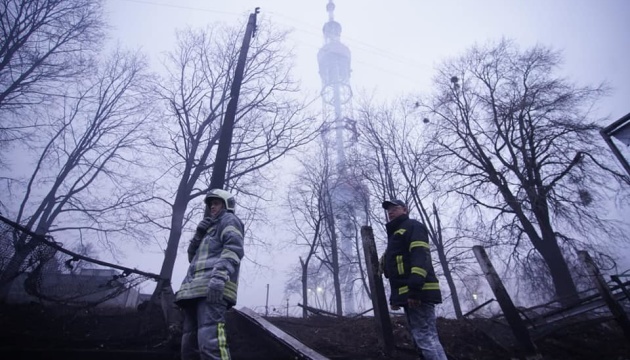
Photo: Ukrinform UA
At a glance
- At least 72 attacks on Ukrainian media reported since February 2022.
- Kyiv region suffered the most attacks at 13 incidents.
- Online media outlets were the most affected, with 24 attacks.
- Significant destruction observed in frontline and occupied areas.
- IMI emphasizes the systematic nature of these assaults by Russia.
Why it matters
The attacks on media outlets signify a direct assault on free press and information access in Ukraine. Such actions hinder journalistic activities and further complicate the information landscape during wartime.
https://www.ukrinform.ua/rubric-society/4110513-rosia-za-cas-povnomasstabnoi-vijni-72-razi-atakuvala-redakcii-ukrainskih-media-imi.html
What Happened
Russia has targeted Ukrainian media outlets at least 72 times since beginning its full-scale invasion. Each attack has led to varying degrees of damage, with some outlets being completely destroyed. This pattern of aggression indicates a systematic effort to undermine the informational infrastructure in Ukraine.
Key Details
The data, compiled by the Institute of Mass Information (IMI), highlight that many media outlets have suffered multiple attacks. The geographic reach of these assaults covers 12 regions within Ukraine, emphasizing the widespread nature of the threat.
Kyiv and its surrounding areas recorded the highest number of incidents, with 13 attacks logged. A large portion of the destruction in this area occurred during 2025 and 2026, correlating with increased Russian missile and drone strikes targeting the capital.
Following Kyiv, the regions most affected include: - **Zaporizhzhia**: 10 attacks - **Sumy**: 9 attacks - **Donetsk and Dnipropetrovsk**: 8 attacks each In Kherson and Luhansk, most media outlets have been completely destroyed, largely due to ongoing combat operations and occupation. In contrast, media in Kharkiv, Sumy, and Chernihiv have endured mostly structural damage from artillery bombardments.
When examining the types of media impacted, online platforms suffered the most, with 24 documented attacks. Print and television media faced 21 assaults, while radio stations were hit 4 times and other formats twice.
IMI reported that these figures reflect a deliberate Russian strategy to destabilize the Ukrainian information space, regardless of the media format or the region targeted. The destruction of media outlets severely hampers journalistic work and limits citizens' access to verified information, especially in frontline and temporarily occupied areas.
IMI emphasized the significance of these attacks in the context of freedom of expression and the right to know. Furthermore, at least 24 publicly known attacks on Ukrainian television towers and other broadcast infrastructure have occurred across 12 regions.
The most affected areas include Kharkiv, Sumy, and Kherson, alongside incidents in Dnipro, Zaporizhzhia, Kyiv, Chernihiv, Donetsk, Luhansk, Vinnytsia, Zhytomyr, and Rivne. Notably, on March 29, 2026, a guided bomb strike by Russian forces led to the destruction of the 'Mezhivskyi Meridian' newspaper's office in Dnipropetrovsk.
Why It Matters
The consistent targeting of media outlets disrupts not only the operational capacity of journalists but also poses a direct threat to the dissemination of accurate information in Ukraine. This situation worsens the information ecosystem during an ongoing conflict, impairing the public's ability to obtain timely news.
Background
Since the onset of the full-scale invasion in February 2022, attacks on media organizations have escalated, reflecting a broader strategy used by Russia to control narratives and suppress dissent within Ukraine. The implications of these actions extend beyond immediate physical destruction, affecting democratic processes and civil rights in the country.
Source: Ukrinform UA
This report is maintained as a live newsroom article. Headlines and top paragraphs may be tightened when fresh reporting changes the clearest angle.
Newsletter
Get the next breaking Ukraine update
Receive the fastest lead, key facts, and follow-up links in one concise newsroom note.
Breaking format
The lead carries the core fact first.
Key figures and locations stay near the top.
Related coverage tracks the same reporting line.