News report
Putin's Threats of 'Oreshnik' Revealed as a Cover for Weakness
The Kremlin has intensified its threats against Ukraine, particularly ahead of the May 9 Victory Day, according to a report from the Institute for the Study of War. Analysts stated that these threats aim to mask Russia's vulnerabilities highlighted by recent Ukrainian strikes.
Share this article
Share to social platforms, or copy the article link and share text manually.
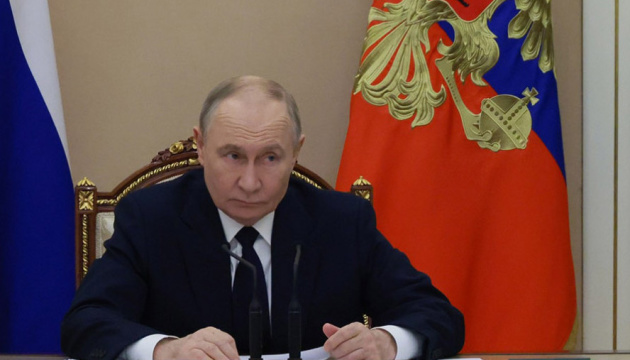
Photo: Ukrinform UA
At a glance
- Russia intensified military threats before May 9 Victory Day.
- ISW indicates these threats aim to mask vulnerabilities exposed by Ukraine's strikes.
- Official threats include potential use of 'Oreshnik' missiles against Kyiv.
- Previous Russian intimidation tactics have not achieved desired compliance.
- Russian leadership is likely feeling pressured by Ukraine's military successes.
Why it matters
Russia's escalating threats reveal its attempts to obscure vulnerabilities exposed by Ukrainian military actions. This dynamic affects both Ukraine's strategic calculations and international responses.
https://www.ukrinform.ua/rubric-ato/4121139-isw-pogrozami-oresnikom-putin-pragne-prihovati-slabkist-aku-vikrili-udari-ukraini-po-tilu-rf.html
What Happened
On May 8, 2026, the Institute for the Study of War (ISW) reported a significant increase in threats from Russia towards Ukraine and its allies, coinciding with heightened military rhetoric in the lead-up to the May 9 Victory Day celebrations. Russia's foreign ministry spokesperson, Maria Zakharova, stated that retaliation would occur if Ukraine conducted strikes on Russian territory, specifically targeting centers of decision-making in Kyiv, which Russia claims could disrupt the Victory Day commemoration.
These threats were echoed by Russian officials, who urged foreign diplomats and civilians to vacate Kyiv, indicating a serious concern about possible Ukrainian military actions. Specifically, they highlighted the potential deployment of 'Oreshnik' medium-range ballistic missiles as a response to Ukrainian strikes, positioning this as an ultimatum to Ukraine and its partners.
Key Details
The report stresses that Russia is likely attempting to project an image of military strength while hiding its weaknesses. Analysts from ISW noted that the escalation in threats serves to cover the vulnerabilities identified after Ukrainian attacks penetrated deep into Russian territory.
Despite these threats, the effectiveness of Russia’s earlier tactics of imposing fear has proven unsuccessful. ISW remarked on the Kremlin's historical use of the 'Oreshnik' threat as a means to compel Ukrainian capitulation at critical points during the conflict, though these efforts have not yielded the desired results.
Additionally, the Kremlin's moves indicate an ongoing strategy to utilize psychological operations against Ukraine and its allies, amplifying threats to maintain a façade of control and stability in view of significant military setbacks.
Why It Matters
This situation is crucial as it reveals the shifting dynamic in the Russia-Ukraine conflict, indicating that Russian leadership feels pressured by the effectiveness of Ukrainian strategies. Understanding these threats can provide insight into the Kremlin's intentions and future tactical decisions.
Background
The escalation of Russian military rhetoric comes just days before the annual Victory Day, a significant occasion in Russia that commemorates its victory in World War II. Circumstantially, threats are a frequent tactic used by the Kremlin, especially in times of increased military activity from Ukraine.
Analysts highlight that previous attempts to intimidate Ukraine or sway its military advances have often backfired, failing to achieve the Kremlin's objectives. The ISW mentioned that, historically, Russia has employed various strategies aimed at instilling fear and forcing compliance, including its attempts to project military advancements and the deployment of missile systems in Belarus as demonstrations of strength toward Europe.
As the May 9 celebrations approach, the geopolitical landscape remains fraught with uncertainty, with potential implications for both regional security and international diplomatic relations.
Source: Ukrinform UA
This report is maintained as a live newsroom article. Headlines and top paragraphs may be tightened when fresh reporting changes the clearest angle.
Newsletter
Get the next major Ukraine report
Follow the strongest verified developments with a cleaner newsroom brief and direct follow-up coverage.
Report format
Fast lead first, then fuller context.
Source photo stays distinct from any illustration.
Related coverage stays inside the same reporting thread.