News update
Norway Joins French Nuclear Deterrence Amid Russia Threat
Norway will join a French-initiated nuclear deterrence system designed to bolster European security against threats from Russia. The announcement was made by French President Emmanuel Macron and Norwegian Prime Minister Jonas Gahr Støre.
Share this article
Share to social platforms, or copy the article link and share text manually.
Developing story
This page is updated as verified details move. The lead and top sections are tightened first when the clearest confirmed angle changes.
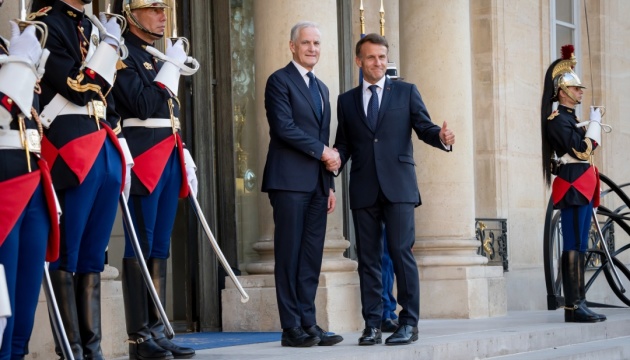
Photo: Ukrinform UA
At a glance
- Norway joins French nuclear deterrence initiative amid Russian threats.
- No nuclear weapons will be stationed in Norway during peacetime.
- Norway emphasizes NATO as its primary security framework.
- Agreement facilitates defense cooperation between France and Norway.
- Focus on collaborative air defense, Arctic operations, and space.
Why it matters
Norway's engagement in this nuclear initiative reflects a proactive approach to regional security amidst rising tensions with Russia. Strengthening ties with France is also significant in enhancing collective deterrence capabilities in Europe.
https://www.ukrinform.ua/rubric-world/4127957-norvegia-uvijde-pid-francuzku-adernu-parasolku-na-tli-zagrozi-z-boku-rosii.html
What Happened
On May 28, 2026, Norway announced its decision to participate in France's nuclear deterrence initiative, which aims to enhance the security of Europe amidst ongoing Russian aggression towards Ukraine. This decision was revealed during a joint press conference held at the Élysée Palace in Paris.
Norwegian Prime Minister Jonas Gahr Støre emphasized that while Norway is joining this initiative, there will be no deployment of nuclear weapons on Norwegian soil during peacetime. He stated that Norway's primary deterrent will continue to be NATO.
Key Details
During the press conference, Støre noted that France is engaging in dialogue with its close allies about how French nuclear capabilities can contribute to European security. He expressed Norway's intent to be involved in this dialogue along with other partners including Poland, the United Kingdom, Germany, and Nordic countries.
President Macron highlighted the significance of Norway’s decision, calling it a crucial step in the partnership between France and Norway. The two leaders also discussed strengthening defense cooperation to address the renewed threats faced by Europe.
Why It Matters
Norway’s involvement in the French nuclear deterrence initiative is a strategic move in the context of heightened tensions in Europe, particularly due to the conflict involving Russia and Ukraine. As Norway shares a border with Russia, this partnership reflects a commitment to enhancing regional security while maintaining NATO as the core framework for deterrence policy.
Background
France and the United Kingdom are currently the only European nations with nuclear arsenals. In March, Macron updated France’s nuclear doctrine to establish the concept of "forward deterrence" among its European partners, though he clarified that this would not grant other countries decision-making power regarding nuclear strikes.
This initiative aligns with broader European efforts to strengthen collective defense capabilities in response to perceived threats from Russia. Earlier discussions in Paris also touched upon the so-called Narvik Agreements, which outline mutual assistance principles between France and Norway.
This includes regular dialogues between their armed forces and increased cooperation in critical areas such as air defense, Arctic operations, and space collaboration.
Source: Ukrinform UA
This report is maintained as a live newsroom article. Headlines and top paragraphs may be tightened when fresh reporting changes the clearest angle.
Newsletter
Get the next Ukraine update
Track the latest policy, diplomacy, aid, and security changes without losing the thread.
Update format
This template prioritizes developments over recap.
Context stays short and tied to the current turn in the story.
The page is designed for repeat readers checking what changed.