Breaking news
Russian Missile Carriers Absent from Azov Sea After Ukrainian Strikes
Ukrainian strikes have led to the notable absence of Russian missile carriers in the Azov Sea, impacting naval operations.
Share this article
Share to social platforms, or copy the article link and share text manually.
Developing story
This page is updated as verified details move. The lead and top sections are tightened first when the clearest confirmed angle changes.
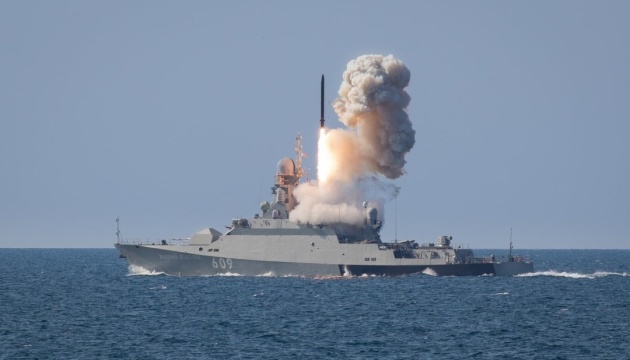
Photo: Ukrinform UA
At a glance
- Ukrainian Navy reports no Russian missile carriers in the Azov Sea.
- Russian vessels previously occupied the area but left after Ukrainian strikes.
- The Azov Sea is considered risky for Russian naval operations.
- Ukrainian defense systems have effectively targeted Russian military assets.
- Navigation continues for Russian vessels operating domestically without entering international ports.
Why it matters
The absence of Russian missile carriers in the Azov Sea denotes a significant shift in naval power dynamics, influenced by Ukrainian strategic strikes. This change not only affects regional security but also impacts Russia's ability to launch missile operations from these waters.
https://www.ukrinform.ua/rubric-ato/4099853-pisla-ukrainskih-udariv-rosia-ne-trimae-raketonosii-v-azovskomu-mori-vms.html
What Happened
According to Dmitry Pletenchuk, a spokesperson for the Ukrainian Navy, Russian missile carriers have left the Azov Sea. This information was shared in a television broadcast, highlighting the lack of Russian vessels in this strategic area.
Last year, Russia deployed missile carriers to the Azov Sea on two occasions for extended periods. However, after being targeted by Ukrainian forces, these vessels quickly departed, indicating the operational challenges faced by the Russian navy in these waters. Pletenchuk stated that the Azov Sea now presents significant risks for Russian naval activities.
Key Details
The area is highly vulnerable due to the capabilities of various Ukrainian defense systems, including those operated by the Ukrainian Navy. The absence of missile carriers reflects a shift in naval dynamics that forces the Russian fleet to reassess its strategy amid ongoing military pressure from Ukraine.
In contrast to the missile carriers, Pletenchuk mentioned that Russian vessels referred to as the "gray fleet" continue to navigate solely between Russian ports without entering international waters.
Background
Recent events have further showcased the effectiveness of Ukrainian strikes against Russian military assets. Reports indicate that Ukrainian forces successfully targeted three Pantsir-S1 anti-aircraft and gun systems located in temporarily occupied Crimea.
As the conflict progresses, the Naval Forces of Ukraine are actively monitoring naval movements, underscoring the importance of strong maritime defense strategies against potential Russian incursions. The reduction of Russian naval capabilities in the Azov Sea may alter operational strategies for both Ukrainian and Russian forces as the conflict continues.
Source: Ukrinform UA
This report is maintained as a live newsroom article. Headlines and top paragraphs may be tightened when fresh reporting changes the clearest angle.
Newsletter
Get the next breaking Ukraine update
Receive the fastest lead, key facts, and follow-up links in one concise newsroom note.
Breaking format
The lead carries the core fact first.
Key figures and locations stay near the top.
Related coverage tracks the same reporting line.