News report
Hungarian Government Accuses Journalist of Espionage Involving Russia
Szabolcs Panyi is accused by the Hungarian government of providing intelligence to a foreign state, possibly Ukraine, amid a scandal with Russian officials. These allegations raise concerns about press freedom.
Share this article
Share to social platforms, or copy the article link and share text manually.
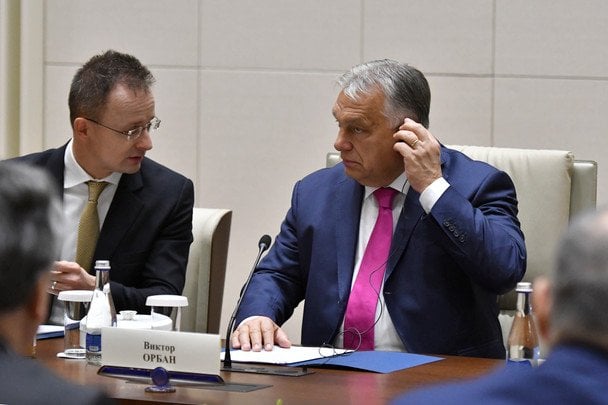
Photo: TSN Ukraine
At a glance
- Hungarian government accuses journalist Szabolcs Panyi of espionage.
- Allegations arise from leaks about phone calls between Péter Szijjártó and Sergey Lavrov.
- Panyi denies accusations, claims to be conducting legitimate investigation.
- The incident raises concerns about press freedom and state accountability.
- Political implications for Hungary's relationship with Russia and the EU are significant.
Why it matters
The accusations against journalist Szabolcs Panyi highlight concerns about press freedom in Hungary. If the government’s claims are politically motivated, it may deter future investigative reporting on sensitive state issues, particularly related to Russia.
https://tsn.ua/svit/uriad-orbana-zvynuvatyv-zurnalista-u-shpyhunstvi-na-koryst-ukrayiny-3049757.html
Espionage Allegations
The Hungarian government alleges that journalist Szabolcs Panyi provided a foreign intelligence service with the phone number of Foreign Minister Péter Szijjártó. Gergely Gulyás, Chief of Staff to Prime Minister Viktor Orbán, stated this act qualifies as espionage rather than legitimate journalism.
Ukraine's Possible Involvement
While officials have not confirmed which foreign state Panyi is accused of assisting, Szijjártó hinted at potential Ukrainian involvement. Panyi has investigated national security topics and has been critical of Russian influence in Hungary.
In particular, he reported on a 2020 conversation where Szijjártó sought support from Russian Foreign Minister Sergey Lavrov for a political ally in Slovakia, amid ongoing scrutiny of Hungary's ties with Russia.
Leaked Tape and Panyi's Response
The allegations emerged from a leaked tape aired by pro-Orbán media, in which Panyi reportedly confirmed Szijjártó's phone number during his journalism work. Panyi denied the accusations in a Facebook post, emphasizing that his reporting focuses on the connections between Hungarian officials and Russia.
Implications for Press Freedom
This situation raises critical issues about press freedom in Hungary, where the government has been criticized for undermining journalistic independence. The accusations against Panyi could potentially stifle investigative journalism regarding state and foreign relations, further complicating public accountability amid heightened geopolitical tensions with Russia.
Historical Context
The strained relationship between Hungary and Ukraine has deep historical roots and shares complex political dimensions. Reports indicate that Hungary has previously provided Russia with insights into internal EU discussions over recent years.
Opposition parties in Hungary are calling for inquiries into possible state treason concerning leaked discussions with Russia. As the political landscape continues to evolve, the treatment of journalists like Panyi is crucial for the future of democracy in Hungary.
Source: TSN Ukraine
This report is maintained as a live newsroom article. Headlines and top paragraphs may be tightened when fresh reporting changes the clearest angle.
Newsletter
Get the next major Ukraine report
Follow the strongest verified developments with a cleaner newsroom brief and direct follow-up coverage.
Report format
Fast lead first, then fuller context.
Source photo stays distinct from any illustration.
Related coverage stays inside the same reporting thread.