News update
Hungarian Elections Signal Shift in Attitude Towards Ukraine
Hungary's elections on April 12, 2026, indicate a significant shift in public sentiment. Reports suggest that Prime Minister Viktor Orban's government may be nearing an end, as voter turnout has surged in opposition-friendly regions.
Share this article
Share to social platforms, or copy the article link and share text manually.
Developing story
This page is updated as verified details move. The lead and top sections are tightened first when the clearest confirmed angle changes.
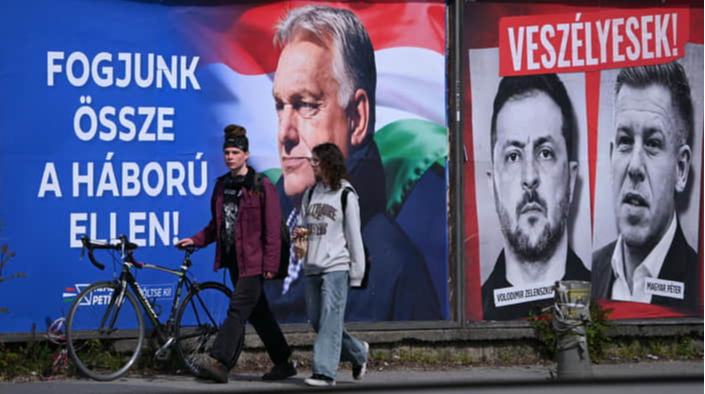
Photo: Ukrainska Pravda UA
At a glance
- Record voter turnout in Hungary's elections, exceeding 75%.
- Orban's government faces significant challenges from opposition parties.
- Shift in campaign rhetoric towards a less aggressive stance against Ukraine.
- Potential for improved diplomatic relations between Hungary and Ukraine.
- Public discontent with Orban linked to his authoritarian governance style.
Why it matters
The elections reflect a growing dissatisfaction with Orban's leadership and a potential shift in Hungary's foreign policy towards Ukraine. A new government could enhance bilateral relations and impact regional stability.
https://www.pravda.com.ua/articles/2026/04/12/8029865/
What Happened
Hungary's parliamentary elections on April 12, 2026, have provided voters an opportunity to express dissatisfaction with Prime Minister Viktor Orban after 16 years in power. Observers report long lines at polling stations, particularly in Budapest, where the majority appear to favor a change in leadership.
Key Details
Turnout for the elections reached record levels, with expectations that it may exceed 75% by the close of polls. High engagement in regions traditionally supportive of the opposition indicates a heightened likelihood of Orban's electoral defeat.
Despite attempts by the ruling party to mobilize its base, analysts believe the opposition coalition, notably “Tysa,” could secure a substantial majority. Throughout the campaign, Orban’s rhetoric portrayed Ukraine as a significant threat, using imagery linking Ukrainian President Volodymyr Zelenskiy with perilous consequences for Hungary.
His statements included claims that Ukraine was a failed state and argued against European support for it. However, these assertions conflicted with his simultaneous accusations that Ukraine was manipulating European capitals.
Orban's campaign successfully resonated with less-educated demographics and older voters, demographics that have historically supported him. The introduction of Russian consultants also reinforced his anti-Ukrainian messaging.
Incidents including the controversial seizure of Ukrainian armored vehicles were deemed largely influenced by Russian operatives, according to reports. In the days leading up to the election, there was a noticeable shift in Orban's campaign communication.
Public imagery changed from aggressive portrayals of Zelenskiy to more favorable depictions of Orban, suggesting a calculated attempt to tone down the anti-Ukrainian narrative amidst growing voter disenchantment. This strategic pivot included removing hostile campaign materials, especially near critical polling locations.
Why It Matters
These elections signify a potential turning point in Hungary's political landscape, with implications for its relationship with Ukraine. A shift from Orban's currently aggressive stance towards a more conciliatory approach could facilitate dialogue and cooperation between the two nations in the future.
Background
Viktor Orban's tenure has been characterized by an increasingly authoritarian governance style, resulting in the erosion of democratic norms in Hungary. His regime has long been criticized for its hostile rhetoric towards Ukraine, casting the country and its leadership in an unfavorable light.
The elections present a crucial juncture for Hungary as public discontent rises. If the opposition gains power, it could signal a change in Hungary's diplomatic approach, possibly fostering improved relations with Ukraine and aligning Hungary more closely with broader EU policies regarding support for Ukraine amid ongoing tensions in the region.
Source: Ukrainska Pravda UA
This report is maintained as a live newsroom article. Headlines and top paragraphs may be tightened when fresh reporting changes the clearest angle.
Newsletter
Get the next Ukraine update
Track the latest policy, diplomacy, aid, and security changes without losing the thread.
Update format
This template prioritizes developments over recap.
Context stays short and tied to the current turn in the story.
The page is designed for repeat readers checking what changed.