News report
Germany Calls for EU to Move Away from Unanimity in Foreign Policy
German Foreign Minister Johann Wadephul has urged the European Union to abandon its unanimity principle in foreign policy. He stated that the current system hampers vital decisions regarding assistance to Ukraine and sanctions against Russia.
Share this article
Share to social platforms, or copy the article link and share text manually.
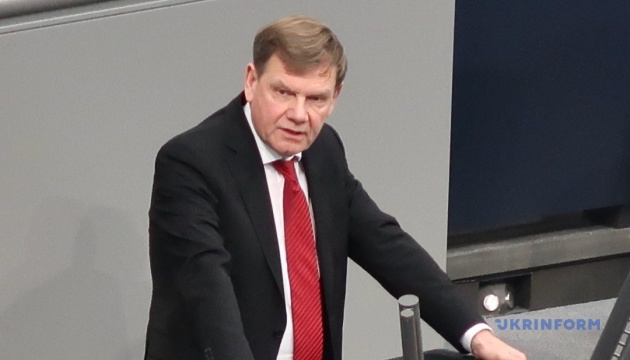
Photo: Ukrinform UA
At a glance
- Wadephul advocates for the EU to ditch unanimity for qualified majority voting.
- Current system hinders timely decisions on aid for Ukraine.
- The principle of unanimity lets individual states block collective security measures.
- Hungary's recent actions have drawn criticism for obstructing EU aid procedures.
- Germany emphasizes the need for an efficient EU response to geopolitical threats.
Why it matters
The ability of the EU to respond decisively to crises is informally linked to its structure. Abandoning unanimity in foreign policy will enhance the EU's capability to implement timely measures like aid to Ukraine and sanctions on Russia.
https://www.ukrinform.ua/rubric-world/4108875-es-mae-vidmovitisa-vid-principu-odnostajnosti-u-zovnisnij-politici-vadeful.html
What Happened
On April 3, 2026, Johann Wadephul, Germany's Foreign Minister, expressed a strong opinion in favor of changing the European Union’s decision-making process in foreign affairs. He suggested the EU should adopt a qualified majority system instead of relying on unanimous consent. This could expedite robust responses to international challenges, including support for Ukraine
Key Details
Wadephul made his statements during an interview with WAZ, as reported by Ukrinform. According to Wadephul, the current principle of unanimity blocks important decisions, particularly those pertaining to military support for Ukraine and sanctions against Russia.
He noted that the experiences over recent weeks concerning EU responses to Ukraine demonstrate the necessity for reform. “We can no longer afford to be blocked by individual states,” Wadephul emphasized.
Wadephul's comments come amidst frustrations regarding Hungary's blocking of certain EU measures, particularly concerning Ukraine. President of the European Commission, Ursula von der Leyen, has previously advocated for the same shift towards qualified majority voting to ensure efficient decision-making by the EU.
Why It Matters
The call for abandoning the unanimity principle is crucial for the EU's capacity to respond effectively to geopolitical crises. Streamlining decision-making could enhance the EU's role and effectiveness on the international stage, particularly in supporting Ukraine against the backdrop of ongoing Russian aggression.
Background
The EU has historically operated on a principle of unanimous decisions, which can lead to stalemates when member states do not agree. A significant recent incident was when Hungary blocked a €90 billion credit line to Ukraine, citing concerns over Ukraine’s adherence to international agreements.
This blockage prompted criticism from within the EU, highlighting the urgent need for a reform in voting procedures to facilitate aid and stability across Europe. Germany's stance, as articulated by Wadephul, reflects a growing consensus among EU leaders that reliance on unanimous approval may hinder timely and necessary actions needed to support Ukraine and manage relations with aggressive neighbors like Russia.
As tensions persist, reevaluating internal processes may be critical for the EU’s future credibility and responsiveness.
Source: Ukrinform UA
This report is maintained as a live newsroom article. Headlines and top paragraphs may be tightened when fresh reporting changes the clearest angle.
Newsletter
Get the next major Ukraine report
Follow the strongest verified developments with a cleaner newsroom brief and direct follow-up coverage.
Report format
Fast lead first, then fuller context.
Source photo stays distinct from any illustration.
Related coverage stays inside the same reporting thread.