News report
France to Join Special Tribunal Committee for Russian Aggression
On April 20, 2026, French Foreign Minister Jean-Noël Barrot announced France's support for establishing a Special Tribunal to address the crime of aggression against Ukraine. The statement was made during a session of the Parliamentary Assembly of the Council of Europe in Strasbourg.
Share this article
Share to social platforms, or copy the article link and share text manually.
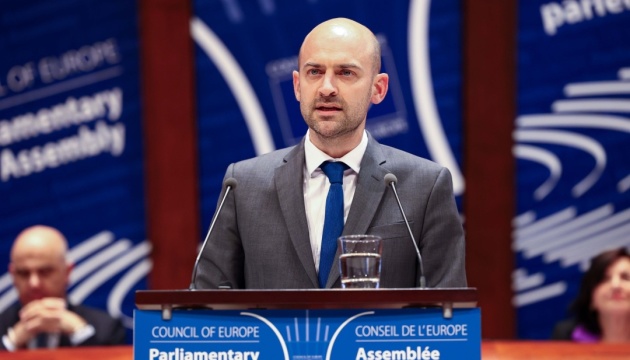
Photo: Ukrinform UA
At a glance
- France supports the establishment of a Special Tribunal for Ukraine.
- French Foreign Minister Barrot announced the initiative on April 20, 2026.
- The tribunal will complement the International Criminal Court.
- Barrot emphasized the need for accountability for Russian leadership.
- The tribunal addresses the broader issues of rule of law and democracy in Europe.
Why it matters
France's involvement in the Special Tribunal marks a pivotal advancement in international legal accountability regarding conflicts. The tribunal's effectiveness could set important precedents for addressing aggression, shaping future responses to international crimes.
https://www.ukrinform.ua/rubric-polytics/4114647-barro-u-radi-evropi-francia-uvijde-do-kerivnogo-komitetu-spectribunalu-sodo-agresii-rf.html
What Happened
During his speech at the Parliamentary Assembly of the Council of Europe on April 20, 2026, French Foreign Minister Jean-Noël Barrot announced that France would join the leadership committee of a Special Tribunal aimed at addressing Russia's aggression against Ukraine. This initiative is seen as a crucial step toward enhancing accountability for the actions of the Russian government in the ongoing conflict.
Barrot emphasized that the tribunal would work in conjunction with the International Criminal Court. He stated, "I am honored to announce that France supports the establishment of a Special Tribunal to address the crime of aggression against Ukraine." He noted that he hopes for the committee’s establishment during a ministerial meeting scheduled in Chișinău on May 14 and 15.
Key Details
During the address, Barrot outlined the need for accountability, emphasizing that the Russian leadership must answer not only for military crimes but also for the strategic planning and execution of what he termed a “colonial aggression” against Ukraine. He reiterated that mere financial reparations are insufficient, asserting, "There is no peace without justice, and there is no justice without truth." Furthermore, Barrot highlighted the broader implications of ensuring the rule of law across Europe.
He remarked on the pressure faced by human rights and democracy, suggesting that the Council of Europe is essential in maintaining these principles in the face of growing challenges.
Why It Matters
France's commitment to joining the Special Tribunal committee is a significant development in the pursuit of accountability for war crimes related to the conflict in Ukraine. The establishment of this tribunal could impact future international legal precedents concerning aggression and military actions in conflict zones.
The tribunal aims to solidify the principle that leaders must be held responsible for their actions, a crucial message as Europe continues to grapple with issues of democracy and human rights.
Background
The call for a Special Tribunal to investigate Russia's aggression follows a series of geopolitical events that have heightened tensions between Russia and Ukraine. In 2023, the Council of Europe initiated a damage register for Ukraine to begin the process of establishing mechanisms for accountability and reparations.
Barrot’s speech reaffirms France’s position as a proactive player in international efforts to uphold justice and legal frameworks in Europe. The broader European context, where the rule of law is increasingly challenged, makes the Council of Europe's role paramount.
Barrot criticized the notion of 'might over rights' that threatens democratic values and human rights across the continent, positioning the Council as a bastion against tyranny.
Source: Ukrinform UA
This report is maintained as a live newsroom article. Headlines and top paragraphs may be tightened when fresh reporting changes the clearest angle.
Newsletter
Get the next major Ukraine report
Follow the strongest verified developments with a cleaner newsroom brief and direct follow-up coverage.
Report format
Fast lead first, then fuller context.
Source photo stays distinct from any illustration.
Related coverage stays inside the same reporting thread.