News report
Expert Comments on Hungary's Future Relations with Ukraine
Political expert Vadym Denysenko commented on the future of Hungary's relations with Ukraine following the upcoming leadership change. He predicts a partial improvement but rules out a complete overhaul.
Share this article
Share to social platforms, or copy the article link and share text manually.
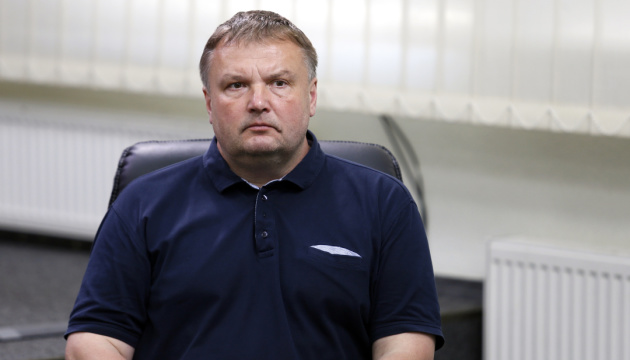
Photo: Ukrinform UA
At a glance
- Vadym Denysenko predicts only minor improvements in Hungary-Ukraine relations.
- Public sentiment in Hungary remains largely negative towards Ukraine.
- A financial assistance package totaling around 90 billion euros may be released.
- Radical shifts in policy are not feasible under the new leadership.
- Russia will continue to seek influence in Hungary despite the political change.
Why it matters
The evolution of Hungary's relations with Ukraine is crucial for understanding regional dynamics in Eastern Europe. Hungary's diplomatic stance directly impacts Ukraine's security and economic model in the face of ongoing tensions with Russia.
https://www.ukrinform.ua/rubric-polytics/4113815-madar-ne-zmoze-rozvernuti-kurs-ugorsini-sodo-ukraini-na-180-gradusiv-ekspert.html
What Happened
Political expert Vadym Denysenko spoke to Ukrinform regarding the anticipated changes in Hungary's diplomatic relations with Ukraine under new Prime Minister Peter Madiar. He noted that while some improvements may be possible, a drastic shift is unlikely.
Denysenko explained that the imminent political leadership transition in Hungary might lead to minor enhancements in Ukraine-Hungary relations. However, he emphasized that a total reboot of these ties is presently unrealistic.
He indicated that various factors, including public sentiment in Hungary, would play a crucial role in this context.
Key Details
Denysenko highlighted potential financial assistance for Ukraine totaling approximately 90 billion euros, which had previously been obstructed by former Prime Minister Viktor Orban. The prospect of this aid may signify a gradual thaw in bilateral relations.
He further clarified that the sentiment among a significant portion of the Hungarian populace is still critical or even negative towards Ukraine, making substantial changes in foreign policy difficult. Denysenko asserted that immediate expectations for a radical pivot in Hungary's stance towards Kyiv are misplaced.
The new government's ability to change course will be limited by existing public opinion, according to Denysenko. “Madiar will not have the political capital to make a sweeping 180-degree turn in policy,” he stated.
Instead, the most likely evolution would be a slow de-escalation of tensions, allowing relations to shift from overtly negative to at least neutral.
Why It Matters
Understanding the dynamics of Ukraine-Hungary relations is essential for international observers, particularly given the ongoing regional tensions influenced by Russian proximity. As Hungary navigates its political landscape, changes in its approach toward Ukraine could have broader implications for regional stability and cooperation in Eastern Europe.
Denysenko pointed out that Orban's loss represents a diminishing Russian influence in Europe, although the Kremlin will likely adapt to the changes. Despite political shifts, Russia’s mechanisms for maintaining its influence through energy ties and institutional networks will persist, making it crucial for Ukraine to remain vigilant.
Background
Hungary's relationship with Ukraine has been strained for several years, mainly due to conflicts surrounding minority rights and domestic politics in Hungary. The recent election of Madiar may offer new varying perspectives on how the two nations interact, especially given his commitment to reforms aimed at addressing media freedom and national governance issues.
Nonetheless, as Denysenko notes, the groundwork laid by Orban's administration has created a challenging environment for potential shifts in policy. Madiar, expected to assume office in early May, has also indicated intentions to suspend government media broadcasts and implement reforms in the media sector, which could influence public sentiment and political narratives domestically and regarding Ukraine.
The future directions of these reforms remain to be fully understood, as Denysenko warns against overestimating the speed of political change within Hungary’s established governance structures.
Source: Ukrinform UA
This report is maintained as a live newsroom article. Headlines and top paragraphs may be tightened when fresh reporting changes the clearest angle.
Newsletter
Get the next major Ukraine report
Follow the strongest verified developments with a cleaner newsroom brief and direct follow-up coverage.
Report format
Fast lead first, then fuller context.
Source photo stays distinct from any illustration.
Related coverage stays inside the same reporting thread.