News report
EU to Release €5.9 Billion for Ukraine's Drone Purchases
The European Union will disburse the first tranche of a €90 billion aid package to Ukraine this month. The €5.9 billion will be designated for drone purchases, according to EU official Kaja Kallas.
Share this article
Share to social platforms, or copy the article link and share text manually.
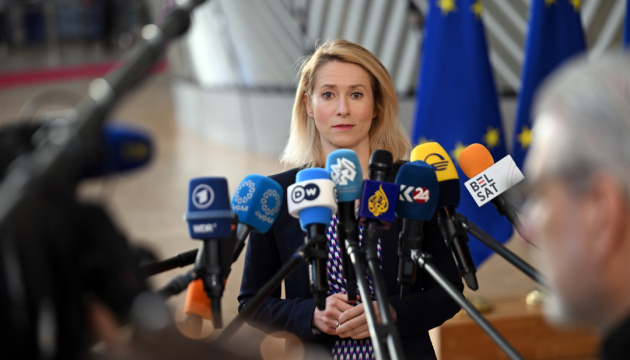
Photo: Ukrinform UA
At a glance
- EU to release €5.9 billion for Ukraine in June 2026.
- Funding aims specifically at acquiring drones for Ukraine's military.
- Kaja Kallas emphasizes urgency as Russia escalates attacks.
- Sanctions against Russia have cost an estimated $1.2 to $1.5 trillion.
- Hungary has lifted its veto, facilitating further EU financial assistance.
Why it matters
The €5.9 billion aid focuses on enhancing Ukraine's military capabilities, specifically through drone acquisitions. This move represents a critical response to ongoing threats from Russia and reinforces EU support for Ukraine's defense.
https://www.ukrinform.ua/rubric-economy/4131599-kallas-pro-90-milardiv-dla-ukraini-persij-trans-bude-cogo-misaca-i-pide-na-pridbanna-droniv.html
What Happened
The European Union is preparing to provide Ukraine with its first installment of a €90 billion financial package. This tranche of €5.9 billion is specifically earmarked for the acquisition of drones.
Kaja Kallas, the EU's High Representative for Foreign Affairs and Security Policy, made the announcement during a meeting of EU defense ministers in Cyprus on June 8, 2026. Kallas emphasized that the allocation of funds prioritizes the needs of Ukraine as it faces ongoing military aggression.
"As we distribute funding, Ukraine's requirements remain a top priority," she stated. She noted that the urgency of the situation demands swift action, highlighting that time is not working in Russia's favor on the battlefield.
Key Details
The €5.9 billion will be used for purchasing drones, which are critical in modern warfare. Kallas underscored that Russia is losing both financial resources and military momentum. Consequently, the country has intensified its attacks on Ukrainian civilians.
Kallas's comments reflect a unified stance among EU member states to support Ukraine and apply pressure on Russia. She added that sanctions imposed by Western nations have cost Russia approximately $1.2 to $1.5 trillion.
As the EU approaches an upcoming Council meeting on Foreign Affairs, Kallas's office is advocating for the implementation of sanctions against over 80 entities involved in Russia's military-industrial complex and human rights violations. Kallas also addressed the future of the European Peace Facility during the discussions.
Hungary has reportedly lifted its veto on releasing €6.6 billion, which Kallas proposed to use to reimburse member states for past arms shipments and to finance new joint procurements. In discussions about enhancing cooperation with Ukraine, the focus included improving defense industrial collaboration, particularly in air defense systems, which are currently viewed as a critical requirement for Ukraine.
The aim is to ensure that production capabilities are developed in the EU while supporting local manufacturing efforts in Ukraine.
Why It Matters
This financial aid is part of a broader strategy to assist Ukraine in maintaining its defense capabilities against ongoing Russian aggression. Drones are becoming increasingly vital in modern combat, making this funding critical for Ukraine's military operations.
The push for further sanctions and enhanced support for Ukraine reflects the EU's commitment to countering Russian military actions and supporting Ukraine's sovereignty.
Background
This announcement follows the release of a previous tranche of €2.8 billion under the EU's Ukraine Facility program. The commitment to aid Ukraine is rooted in the ongoing conflict and the EU's desire to bolster Ukraine's defense capabilities against Russia's sustained military efforts.
The discussions among EU ministers indicate a concerted effort to align support for Ukraine while also increasing pressure on the Russian economy. This coordinated approach includes financial investment and strategic planning in military procurement, reflecting the seriousness with which the EU regards the threat posed by Russia.
As military needs evolve, so too does the EU's response to ensure Ukraine can effectively defend itself.
Source: Ukrinform UA
This report is maintained as a live newsroom article. Headlines and top paragraphs may be tightened when fresh reporting changes the clearest angle.
Newsletter
Get the next major Ukraine report
Follow the strongest verified developments with a cleaner newsroom brief and direct follow-up coverage.
Report format
Fast lead first, then fuller context.
Source photo stays distinct from any illustration.
Related coverage stays inside the same reporting thread.