Breaking news
EU Ambassador Condemns Russia's Ongoing Attacks on Ukraine
Katarína Mathernová, the EU Ambassador to Ukraine, condemned recent Russian attacks aimed at Ukraine. This statement followed a significant assault on April 3, 2026, where residential buildings were affected.
Share this article
Share to social platforms, or copy the article link and share text manually.
Developing story
This page is updated as verified details move. The lead and top sections are tightened first when the clearest confirmed angle changes.
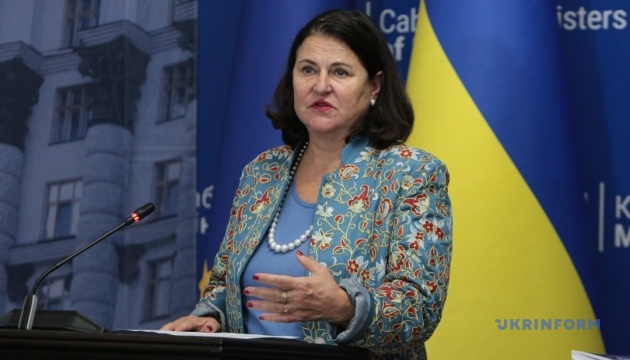
Photo: Ukrinform UA
At a glance
- EU Ambassador Katarína Mathernová condemns Russia's attacks.
- Recent strikes on April 3 impacted residential areas and infrastructure.
- At least five civilians killed in the ongoing assaults.
- Ukrainian defenses neutralized 26 missiles and 515 drones.
- Estonia's foreign minister labeled the attacks as an "inhuman assault."
Why it matters
The continued aggression represents a significant threat to civilian safety and international law. Heightened military actions disrupt daily life and further complicate the humanitarian situation in Ukraine.
https://www.ukrinform.ua/rubric-polytics/4108941-posol-es-pro-masovanu-ataku-rosii-cej-cilodobovij-teror-mae-pripinitisa.html
What Happened
Katarína Mathernová, the European Union's Ambassador to Ukraine, reacted sharply to a series of Russian attacks reported on April 3, 2026. The ambassador emphasized the need to end what she referred to as the "daily terror" imposed by Russia.
This comment was shared via social media platform X, and follows an incident in which drones and cruise missiles were used against various locations in Ukraine. In the Kyiv region specifically, residential buildings, civilian infrastructure, and a veterinary clinic were hit.
Reports indicate that these attacks resulted in emergency electricity shutoffs aimed at managing the aftermath. Mathernová's statement comes amid a changing tactic from the Russian military, shifting to more frequent strikes throughout the day.
Key Details
According to initial reports, at least five civilians have been killed as a direct result of the attacks on this day. Ukrainian air defense forces managed to neutralize 26 Russian missiles along with 515 drones of various types during the incidents.
The situation indicates an escalation in the conflict as Russian forces appear to be modifying their approach to attacks, now targeting cities more aggressively during daytime hours. Minister of Foreign Affairs of Estonia, Margus Tsahkna, joined in the condemnation, labeling the attacks as "inhuman aggression" against civilians.
The international response appears increasingly critical of Russia's military strategies which continue to endanger civilian lives.
Why It Matters
The ongoing attacks against civilian targets raise significant concerns regarding international law and humanitarian norms in war. Mathernová's statements echo a larger call from multiple nations for a reassessment of tactics employed by Russia. As Ukraine faces these renewed threats, the implications for regional security and civilian safety are profound.
Background
The ongoing conflict in Ukraine has seen repeated cycles of violence since its escalation in February 2022. Utilizing both drones and cruise missiles has become a hallmark of Russian military operations.
The international community continues to monitor these developments closely, advocating for measures to protect civilians and uphold international humanitarian standards. Amid this conflict, the EU has expressed solidarity with Ukraine, pushing for diplomatic solutions to bring an end to hostilities.
The current state of military engagement demonstrates the urgent need for diplomatic interventions and sustained international support for Ukraine’s sovereignty.
Source: Ukrinform UA
This report is maintained as a live newsroom article. Headlines and top paragraphs may be tightened when fresh reporting changes the clearest angle.
Newsletter
Get the next breaking Ukraine update
Receive the fastest lead, key facts, and follow-up links in one concise newsroom note.
Breaking format
The lead carries the core fact first.
Key figures and locations stay near the top.
Related coverage tracks the same reporting line.