News report
Estonian PM Calls for EU Tariffs on Russian Imports for Ukraine
Estonian Prime Minister Kristen Michal has urged the European Union to impose tariffs on Russian imports. This call comes as a measure to fund Ukraine's reconstruction following extensive destruction from the ongoing war.
Share this article
Share to social platforms, or copy the article link and share text manually.
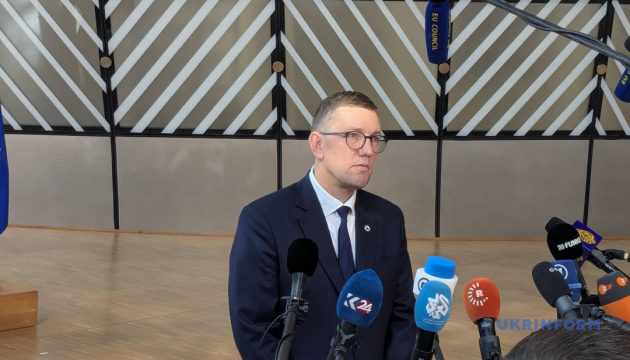
Photo: Ukrinform EN
At a glance
- Estonian PM urges EU to impose tariffs on Russian goods.
- Cost of Ukraine's reconstruction is estimated at hundreds of billions of euros.
- Previous calls for tariffs have stalled in EU discussions.
- Ukraine's recovery may require EUR 500 billion over ten years.
- 13% of Ukraine’s housing stock was destroyed in recent conflict.
Why it matters
Tariffs on Russian goods could generate substantial funds for Ukraine's rebuilding. They would also reinforce Europe’s position against Russia's actions in the conflict, ensuring accountability and support for Ukraine.
https://www.ukrinform.net/rubric-economy/4116352-estonian-pm-urges-eu-to-impose-tariffs-on-russian-goods-to-fund-ukraines-reconstruction.html
What Happened
Estonian Prime Minister Kristen Michal made a strong proposal for the European Union to impose taxes on Russian imports to finance Ukraine's reconstruction. This statement was reported to POLITICO and relayed by Ukrinform on April 24, 2026.
Key Details
According to Michal, the cost for restoring Ukrainian infrastructure and cities affected by Russian bombardments is expected to reach hundreds of billions of euros. While Europe has enacted various sanctions and banned certain imports from Russia, Michal pointed out that tariffs on permitted goods with the explicit purpose of aiding Ukraine have not yet been implemented.
Michal emphasized the need for such tariffs, stating, "We need to tariff the goods from Russia to pay off the damages." The idea has circulated in various discussions and meetings, and seven countries, including Estonia, previously advocated for tariffs on Russian goods such as steel and fertilizers. However, this proposal did not progress to inclusion in the EU's recent sanctions package.
The Prime Minister noted that even the EUR 210 billion in frozen Russian assets stored in Brussels would not suffice to cover the extensive costs associated with reconstructing Ukraine. A collaborative study by the Ukrainian government, the United Nations, the European Commission, and the World Bank last February confirmed that Ukraine's recovery could require up to EUR 500 billion over a ten-year period.
The study reported significant physical destruction, indicating that approximately 13% of Ukraine's housing stock was eliminated during the first three years of conflict. Michal stressed the importance of holding Russia accountable for the damages inflicted.
Reflecting on Estonia's historical context with Russia, he stated, "They should be held responsible, because if they are not held responsible, then this will repeat.” Michal also commented on Ukraine's path forward, describing its accelerated accession to the EU as a beneficial prospect, provided that the country meets the necessary criteria and implements required reforms.
Why It Matters
The imposition of tariffs on Russian goods could not only provide financial resources for Ukraine but also serve as a punitive measure against Russia for its ongoing aggression. By holding Russia accountable for the costs of reconstruction, the EU could redefine its economic relationship with Moscow and reinforce support for Ukraine.
Background
Estonia, along with other Baltic states, has historically been skeptical of Russia due to its proximity and past conflicts. The call for imposing tariffs reflects a broader strategy among EU nations to support Ukraine while maintaining pressure on Russia.
Previously, various sanctions were established targeting specific sectors, but there remains a significant conversation around how to direct financial support effectively towards Ukraine's recovery efforts.
Source: Ukrinform EN
This report is maintained as a live newsroom article. Headlines and top paragraphs may be tightened when fresh reporting changes the clearest angle.
Newsletter
Get the next major Ukraine report
Follow the strongest verified developments with a cleaner newsroom brief and direct follow-up coverage.
Report format
Fast lead first, then fuller context.
Source photo stays distinct from any illustration.
Related coverage stays inside the same reporting thread.