Breaking news
Dnipropetrovsk Region Endures Devastating Wave of Russian Attacks
In a harrowing escalation, Russian forces launched more than 30 attacks in the Dnipropetrovsk region on March 22, resulting in two civilian deaths and significant destruction across multiple districts including Nikopol, Pokrovske, Marganets, and Chervonohryhorivka. The attack severely impacted local infrastructure a...
Share this article
Share to social platforms, or copy the article link and share text manually.
Developing story
This page is updated as verified details move. The lead and top sections are tightened first when the clearest confirmed angle changes.
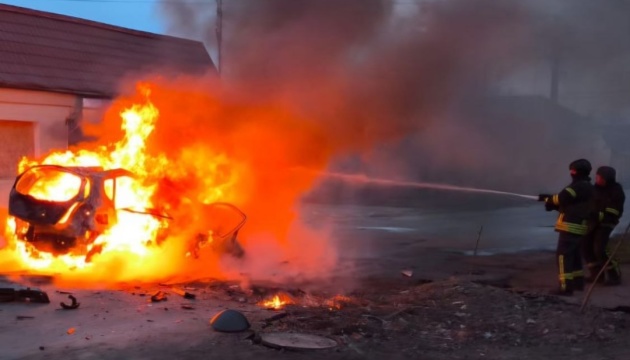
Photo: Ukrinform EN
At a glance
- More than 30 Russian attacks were launched against the Dnipropetrovsk region on March 22.
- Confirmed casualties include two civilian fatalities due to drone and artillery strikes.
- Nikopol and surrounding communities have sustained severe infrastructure damage.
- An earlier nighttime assault involved nearly 20 attacks, resulting in injuries.
- Local authorities are prioritizing damage assessments and mobilizing humanitarian assistance.
Why it matters
The relentless violence in the Dnipropetrovsk region highlights an urgent humanitarian crisis exacerbated by ongoing conflict. The significant loss of civilian life and destruction of infrastructure reveal the precarious conditions faced by civilians, emphasizing the critical need for international humanitarian aid and efforts to bring stability to the area.
https://www.ukrinform.net/rubric-ato/4104384-russians-attack-three-districts-of-dnipropetrovsk-region-more-than-30-times-since-morning-resulting-in-casualties.html
Overview of the Assaults

The Dnipropetrovsk region has once again been thrust into the chaos of war, as Russian forces conducted over 30 aerial and artillery strikes on March 22. The onslaught has tragically resulted in two confirmed civilian deaths, as well as widespread destruction across several towns, most notably in Nikopol, Pokrovske, Marganets, and Chervonohryhorivka.
This latest wave of violence underscores the relentless nature of the conflict affecting the region.
Infrastructure Devastation
The attacks have left deep scars on both residential and commercial infrastructure. Numerous buildings have sustained severe damage, with some completely destroyed.
Humanitarian Crisis Deepens
The Kryvyi Rih district, particularly the Zelenodolsk community, has reported extensive damage to residential properties, further complicating the already dire humanitarian situation. Access to critical services such as healthcare, clean water, and electricity has been significantly disrupted.
These setbacks have exacerbated the struggles faced by local residents, who are now grappling with the immediate consequences of violence.
Heightened Alert and Government Response
The wave of attacks follows a tumultuous night wherein nearly 20 strikes were reported across four districts, resulting in injuries to at least one individual. In response to the ongoing crisis, local authorities are mobilizing resources to assess the full extent of damage and to provide essential humanitarian aid to those affected by this fresh surge of violence.
Stress levels among residents are elevated as fear and uncertainty continue to loom.
Implications for Humanitarian Efforts
These frequent assaults not only endanger civilian lives but also severely impede humanitarian operations. Organizations tasked with delivering support to the impacted population are finding it increasingly difficult to navigate the growing challenges posed by the conflict.
The gravity of this situation calls for immediate international attention and sustained assistance to alleviate the suffering endured by the residents of the Dnipropetrovsk region.
Source: Ukrinform EN
This report is maintained as a live newsroom article. Headlines and top paragraphs may be tightened when fresh reporting changes the clearest angle.
Newsletter
Get the next breaking Ukraine update
Receive the fastest lead, key facts, and follow-up links in one concise newsroom note.
Breaking format
The lead carries the core fact first.
Key figures and locations stay near the top.
Related coverage tracks the same reporting line.