News report
Developer of Russia's Zircon Missile, Alexander Leonov, Dies
Alexander Leonov, the chief designer of the Zircon missile, has died in Russia at the age of 74. His death was reported by DW and other outlets.
Share this article
Share to social platforms, or copy the article link and share text manually.
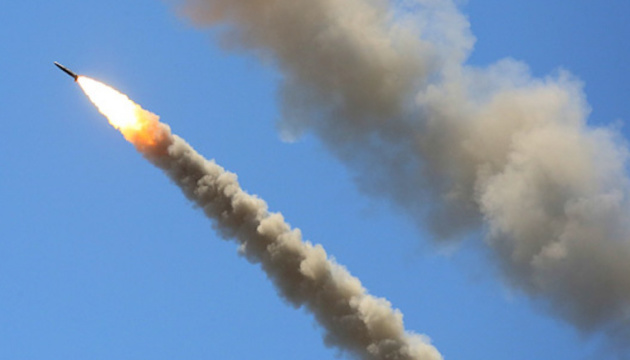
Photo: Ukrinform UA
At a glance
- Alexander Leonov, chief designer of the Zircon missile, has died at 74.
- He led the development of both the Zircon and the Avangard missile systems.
- The Zircon missile has been actively used in attacks against Ukraine since early 2023.
- Leonov's passing raises questions about the future direction of Russian military technology.
Why it matters
Leonov's contributions to hypersonic missile technology have directly influenced military actions against Ukraine. His death may impact Russia's future military projects.
https://www.ukrinform.ua/rubric-world/4109454-u-rosii-pomer-rozrobnik-raketi-cirkon.html
What Happened

Alexander Leonov, a prominent figure in Russia's military industry and the lead developer of the Zircon missile, has died. His passing occurred recently, as reported by multiple sources including DW.
Leonov, who was 74 years old at the time of his death, held the position of chief designer at the military-industrial corporation NPO Mashinostroyenia. He was known for overseeing the development of several critical military technologies.
Key Details
Leonov was born on February 26, 1952, in the Tambov region of Russia. Under his guidance, NPO Mashinostroyenia was responsible not only for the Zircon hypersonic missile but also for combat systems used in intercontinental ballistic missiles, notably the Avangard.
Additionally, the company developed radar satellites for Earth observation, enhancing Russia's military and strategic capabilities. The Zircon missile is notable for its speed and precision, making it a key component of Russia's offensive operations.
Since the beginning of the year, Ukrainian military officials have reported an increased use of the Zircon system by Russian forces against Ukraine. Dmitro Pletenchuk, a spokesperson for Ukraine's Naval Forces, indicated that these strikes might be a strategic response to compensate for the use of ballistic weapons.
Why It Matters
Leonov’s work on the Zircon missile has had significant implications for military engagements in the region. The continued deployment of such advanced weaponry poses ongoing challenges for Ukraine, as these systems are designed to bypass traditional defense mechanisms.
His passing may also lead to shifts within the Russian military-industrial complex, potentially impacting future projects and developments in missile technology.
Background
The Zircon missile system has gained attention for its deployment in recent conflicts, particularly in strikes against Ukrainian targets. The introduction of such weaponry has raised concerns regarding military escalations and the potential for increased attacks on Ukrainian infrastructure.
Leonov's contributions to the field of military technology are part of a broader narrative concerning Russia’s advancements in hypersonic weaponry, which poses threats not only to Ukraine but also to global security dynamics. As military innovations continue to evolve, the implications of advancements in missile defense and offensive systems are crucial for international stability.
Source: Ukrinform UA
This report is maintained as a live newsroom article. Headlines and top paragraphs may be tightened when fresh reporting changes the clearest angle.
Newsletter
Get the next major Ukraine report
Follow the strongest verified developments with a cleaner newsroom brief and direct follow-up coverage.
Report format
Fast lead first, then fuller context.
Source photo stays distinct from any illustration.
Related coverage stays inside the same reporting thread.