News report
Concerns Rise Over Military Mobilization in Ukraine
The mobilization situation in Ukraine remains complex and challenging, according to a political scientist's interview. Concerns have been raised about societal perceptions of military service and evasion.
Share this article
Share to social platforms, or copy the article link and share text manually.
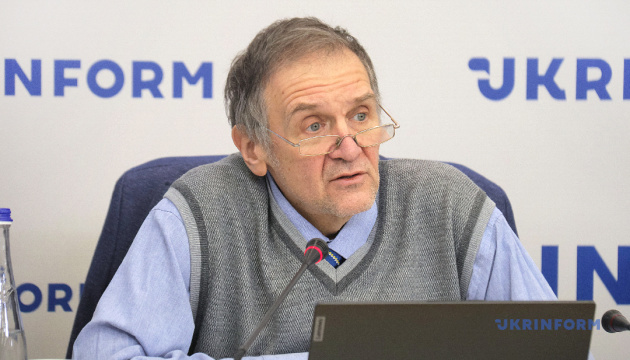
Photo: Ukrinform UA
At a glance
- Political scientist Alexei Garan highlights complexities in Ukraine's mobilization.
- Approximately half of Ukrainians express willingness to defend their country.
- Divided societal attitudes towards military service evasion are concerning.
- Effective communication from the government is critical for public trust.
- The government faces pressure to reform Territorial Centers for Troop Recruitment.
Why it matters
The mobilization situation directly affects Ukraine's military readiness and public support. Clear government communication can strengthen societal trust and reduce resistance against enlistment.
https://www.ukrinform.ua/rubric-society/4120066-situacia-z-mobilizacieu-v-ukraini-politolog-kaze-pro-trivoznu-tendenciu-u-socopituvanni.html
What Happened
The ongoing mobilization efforts in Ukraine have become increasingly challenging, with notable remarks made by Alexei Garan, a political scientist from the National University of Kyiv-Mohyla Academy. In an interview with Ukrinform, Garan emphasized the necessity for systemic government engagement with society.
The noted complexities extend beyond administrative measures and reflect deeper societal concerns about military service readiness.
Key Details
Garan pointed out that issues related to draft evasion present a significant concern. However, sociological data offer an ambiguous picture. Surveys conducted by the Kyiv International Institute of Sociology (KIIS) indicate that approximately half of Ukrainians express a willingness to defend their country.
Despite this, Garan warned that such responses may be influenced by social desirability bias, meaning people's answers might reflect what they believe is expected of them. Additionally, a study by the Institute of Social and Political Psychology reveals a concerning trend: societal attitudes towards individuals evading military service are divided.
About half of the respondents reportedly sympathize with those avoiding service, which Garan views as alarming. He highlights the importance of public trust and clear communication about mobilization processes.
The expert further stressed that addressing public concerns involves not only enforceable measures but also transparent explanations regarding service conditions, duration, and guarantees. He noted that the government has not sufficiently clarified what recruits can expect upon enlistment.
The Third Assault Brigade and the 'Charter' have been highlighted as positive examples, effectively communicating with the public and encouraging volunteer enlistment. Conversely, Garan criticized the current system of Territorial Centers for Troop Recruitment (TCTR), advocating for reform.
However, he argued that their elimination would not solve existing issues and called for a comprehensive restructuring instead. Garan also mentioned the negative public perception of TCTR, which has been partly fueled by Russian disinformation campaigns that portray these centers as adversaries.
He urged the need for a balanced approach, advocating for legal accountability for any unlawful acts by TCTR representatives, while also condemning attacks against them. The expert pointed to the state’s failure to respond promptly to such incidents as exacerbating the situation.
Garan insisted that society expects a clear and decisive reaction from government authorities regarding any incidents involving the military or TCTR personnel. He highlighted that the absence of a firm stance from leadership could be perceived as a governmental oversight.
The head of the President’s Office, Kyrylo Budanov, has expressed that the complexities of mobilization issues cannot be effectively addressed until the ongoing war concludes. He also criticized evaders and those opposing the TCTR, urging them to adopt a more mature perspective on the situation.
Why It Matters
Understanding public sentiment regarding military service is crucial for Ukraine’s mobilization strategy. As the dynamics of public trust and societal attitudes shift, it is essential for the government to reassess its communication and engagement strategies to foster preparedness among citizens amidst ongoing conflict.
Background
Since the onset of the ongoing conflict, Ukraine has faced persistent challenges in military mobilization, particularly regarding public opinion on service. The government has struggled to maintain high levels of enlistment and morale, particularly in the face of draft evasion and societal division over the topic.
Efforts to engage the public and address these challenges have become vital within the current context, spotlighting the relationship between government messaging and societal readiness to serve.
Source: Ukrinform UA
This report is maintained as a live newsroom article. Headlines and top paragraphs may be tightened when fresh reporting changes the clearest angle.
Newsletter
Get the next major Ukraine report
Follow the strongest verified developments with a cleaner newsroom brief and direct follow-up coverage.
Report format
Fast lead first, then fuller context.
Source photo stays distinct from any illustration.
Related coverage stays inside the same reporting thread.