News report
Chapuszczic Comments on Orbán's Election Loss and EU Dynamics
Former Polish Foreign Minister Jacek Chaputowicz remarked that the defeat of Viktor Orbán's Fidesz party in Hungary complicates the ability of some EU countries to mask their pro-Russian sympathies. His comments were reported by Ukrinform.
Share this article
Share to social platforms, or copy the article link and share text manually.
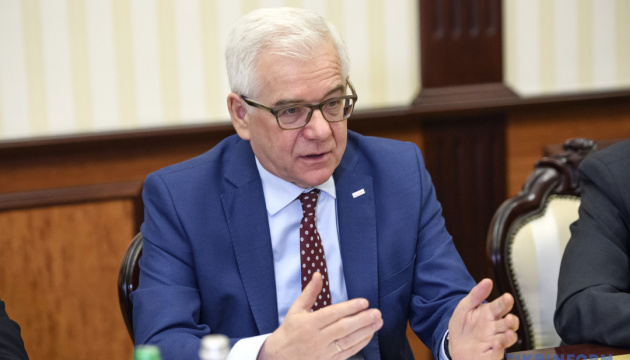
Photo: Ukrinform UA
At a glance
- Orbán's Fidesz party lost power, revealing pro-Russian sentiments in the EU.
- Hungarians expressed fatigue with corruption and pro-Russian alignment.
- Chaputowicz forecasts unblocking of 90 billion euros for Ukraine.
- Orbán's defeat may reduce EU hindrances to sanctions against Russia.
- EU nations may remain divided on supporting Ukraine despite Orbán's removal.
Why it matters
The outcome of Hungary's election may reshape EU dynamics regarding support for Ukraine. A shift away from Orbán's pro-Russian policies could lead to unblocking financial aid and enhancing sanction measures against Russia.
https://www.ukrinform.ua/rubric-polytics/4112267-pisla-porazki-orbana-deakim-krainam-es-skladnise-bude-prihovati-prorosijski-simpatii-caputovic.html
What Happened
The recent parliamentary election defeat of Viktor Orbán's Fidesz party in Hungary has significant implications for European Union politics. According to Jacek Chaputowicz, former Polish Foreign Minister, this loss indicates that EU countries can no longer hide their pro-Russian leanings behind Orbán's administration.
Key Details
Chaputowicz's commentary highlights a growing fatigue among Hungarians with Orbán's government, which has been in power for 16 years. He noted that voters have expressed concerns over corruption and the strong alignment with Russia, especially in terms of anti-Ukrainian policies.
His statements suggest that this shift could facilitate a more unified EU response towards Ukraine without the complications of Hungary's previous vetoes. During the election campaign, sentiments such as "Russians go home" resonated with the electorate, indicating a pro-European stance among the Hungarian populace.
Chaputowicz anticipates that this change will enable the EU to unblock around 90 billion euros in funding that had been stalled under Orbán's administration. Additionally, he sees potential for more effective sanctions against Russia moving forward, as Hungary's previous positioning may no longer serve as an obstacle.
Chaputowicz emphasized that Orbán played a scapegoat role within the EU, allowing other nations to defer responsibility for their own agreements with Russia. He pointed out that multiple EU member states had been hesitant to dramatically alter their relationships with Russia even with Orbán facilitating a convenient cover.
He anticipates that even without Orbán, some nations may continue to show reluctance in supporting Ukraine adequately.
Why It Matters
Chaputowicz's insights into Orbán's electoral defeat suggest that new openings for EU policy changes regarding Ukraine might emerge. The potential for removed blocks on critical funding and sanctions against Russia could shift the dynamics of support for Ukraine within Europe. However, lingering pro-Russian sentiments among some EU members may still pose challenges ahead.
Background
Viktor Orbán's long tenure has been marked by increasing ties with Russia, particularly regarding economic support and political alliances. His government's anti-Ukrainian rhetoric had previously shielded other EU nations that shared similar sentiments but wanted to avoid direct confrontation.
As the EU seeks a cohesive strategy towards addressing the ongoing conflict in Ukraine, the political landscape may be significantly altered following the election, with implications for bilateral relations across Europe. As Hungary's new party leadership emerges, there is cautious optimism among observers that stronger alliances with NATO and the EU will take shape.
Observers, including Chaputowicz, will be watching closely to see if this translates into tangible policy changes in support of Ukraine amidst the broader shifting landscape of Eastern European politics.
Source: Ukrinform UA
This report is maintained as a live newsroom article. Headlines and top paragraphs may be tightened when fresh reporting changes the clearest angle.
Newsletter
Get the next major Ukraine report
Follow the strongest verified developments with a cleaner newsroom brief and direct follow-up coverage.
Report format
Fast lead first, then fuller context.
Source photo stays distinct from any illustration.
Related coverage stays inside the same reporting thread.