News report
Canada Becomes First Non-European Nation to Sign Ukraine Claims Con...
Canada has signed the Convention establishing an International Claims Commission for Ukraine, becoming the first country outside Europe to do so. Ukrainian Foreign Minister Andrii Sybiha announced this development on social media.
Share this article
Share to social platforms, or copy the article link and share text manually.
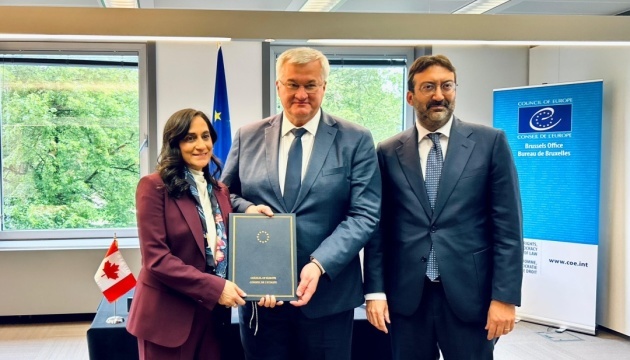
Photo: Ukrinform EN
At a glance
- Canada signs the Convention establishing the International Claims Commission for Ukraine.
- This signing occurred on May 12, 2026, as reported by Ukrainian Foreign Minister Andrii Sybiha.
- The Commission aims to provide justice and compensation for damages from Russian aggression.
- The Convention was opened for signature in December 2025 during an international conference in The Hague.
- Ireland's parliament ratified the Convention prior to Canada's signing, indicating growing international support.
Why it matters
The signing of the Convention by Canada marks an important milestone in providing avenues for accountability and justice for Ukraine. It may inspire further international actions against Russian aggression and support Ukraine's claims for reparations.
https://www.ukrinform.net/rubric-polytics/4122471-canada-signs-convention-establishing-international-claims-commission-for-ukraine.html
What Happened

On May 12, 2026, Canada became the first non-European country to sign the Convention establishing an International Claims Commission for Ukraine. This signing was confirmed by Ukrainian Foreign Minister Andrii Sybiha through a post on social media platform X.
Sybiha expressed his gratitude towards Canada's Defense Minister Anita Anand for this significant development. The newly established Claims Commission aims to provide justice and compensation for damages resulting from Russian aggression against Ukraine and its citizens.
Key Details
The Convention was opened for signature on December 16, 2025, during an international conference in The Hague organized by the Council of Europe and the Netherlands. This Commission is part of a broader accountability framework aimed at addressing the suffering caused by the ongoing conflict.
The move by Canada signifies a growing international commitment to hold Russia accountable for its actions. The Claims Commission is expected to facilitate claims from individuals and entities affected by the conflict, thus contributing to the legal and reparative processes in the aftermath of the war.
On May 6, prior to Canada’s signing, the lower house of Ireland's parliament also ratified the Convention, demonstrating a step towards unifying efforts among nations against Russian actions in Ukraine.
Why It Matters
The establishment of the International Claims Commission represents a crucial avenue for redress and accountability for Ukraine. By signing the Convention, Canada bolsters international support for Ukraine's pursuit of justice and may encourage other nations to follow suit.
This initiative highlights a collective effort to address the humanitarian impacts of the conflict and to seek reparations for violations experienced during the war.
Background
The Convention for the Claims Commission forms part of a comprehensive strategy aimed at addressing the aftermath of Russia's invasion of Ukraine. The ongoing conflict has led to significant destruction and hardship, thus necessitating mechanisms for compensation and legal accountability.
Countries across the globe are grappling with the ramifications of the war, and establishing such commissions could pave the way for systematic reparations for losses incurred by Ukrainian citizens and the state. The international community's engagement showcases a firm stance against aggressor states and a commitment to upholding justice in conflict situations.
Source: Ukrinform EN
This report is maintained as a live newsroom article. Headlines and top paragraphs may be tightened when fresh reporting changes the clearest angle.
Newsletter
Get the next major Ukraine report
Follow the strongest verified developments with a cleaner newsroom brief and direct follow-up coverage.
Report format
Fast lead first, then fuller context.
Source photo stays distinct from any illustration.
Related coverage stays inside the same reporting thread.