News report
Escalation in Pokrovsk Direction: 134 Clashes on March 22
The fighting on March 22 marked a significant surge in hostilities in the Pokrovsk area, highlighting the ongoing intensity of the conflict between Ukraine and Russia.
Share this article
Share to social platforms, or copy the article link and share text manually.
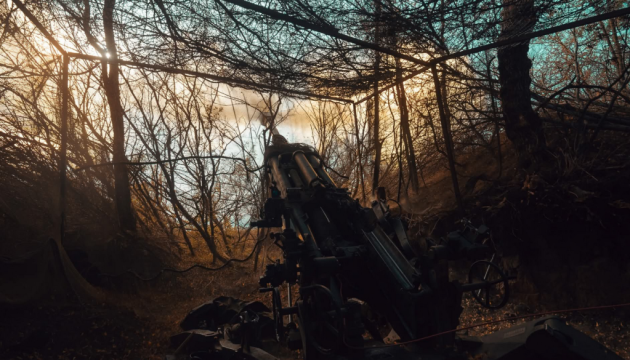
Photo: Ukrinform UA
At a glance
- On March 22, Ukrainian forces recorded 134 clashes with Russian troops.
- Russian military initiated 67 airstrikes, releasing 285 bombs during the confrontations.
- Ukrainian forces successfully targeted 11 sites of Russian troop concentrations and a UAV command post.
- Over 9,266 kamikaze drones were utilized by Russian forces in their attacks.
- Attempts by Russian troops to launch successful offensives in multiple regions were largely ineffective.
Why it matters
The clashes reported on March 22 and the scale of military operations in the Pokrovsk direction are critical indicators of the ongoing intensity of the conflict. This information is vital for gauging the shifting balance of power in Ukraine’s defense against Russian aggression and the broader strategic landscape of the war.
https://www.ukrinform.ua/rubric-ato/4104459-pokrovskij-napramok-najgaracisij-na-fronti-minuloi-dobi-bulo-134-boezitknenna.html
Significant Clashes in the Pokrovsk Region

On March 22, Ukrainian forces reported 134 clashes with Russian troops in the Pokrovsk direction. This increase in military activity indicates ongoing volatility along the frontline.
According to the General Staff of the Armed Forces of Ukraine, these confrontations were part of broader military operations across multiple regions. The Pokrovsk area specifically saw a concentration of attacks and defensive maneuvers, reflecting its strategic significance in the conflict.
In response to Ukrainian resistance, Russian forces conducted 67 aerial strikes, deploying 285 guided bombs and various unmanned aerial vehicles, including 9,266 kamikaze drones. Additionally, Russian artillery units fired 3,811 times, with 57 bombardments using multiple launch rocket systems (MLRS).
Key targets included settlements such as Ivanivka and Velikomykhailivka in the Dnipropetrovsk region, as well as locations within Zaporizhzhia and Sumy regions.
Ukrainian forces retaliated effectively, striking 11 concentrations of Russian personnel and infrastructure and targeting a UAV command post.
Broader Context of Military Activities
The combat was not isolated to the Pokrovsk direction. Russian military activities also spread to the Northeastern Slobozhansk and Kursk regions, where 103 shellings, including five from artillery, were reported. Efforts to penetrate Ukrainian defenses in the Southern and Kupiansk directions met with limited success, as repeated assaults were largely repelled.
The towns of Kupiansk and Borivska Andriivka were significant areas of combat, with both sides exchanging fire in attempts to gain ground.
Strategic Conditions in Other Regions
In contrast, the Volyn and Polissya regions experienced a notable lack of Russian offensive actions, suggesting a redirection of military focus toward more critical fronts. This shift may reflect an evolving strategy as Russian forces continue their operations within Ukraine.
Since the start of the full-scale invasion, estimates indicate that Russian combat losses exceed 1,288,850 personnel, demonstrating the heavy toll of the conflict on both sides and the ongoing humanitarian crisis it has triggered.
Conclusion
The events of March 22 in the Pokrovsk direction illustrate the fierce struggle between Ukrainian and Russian forces. The number of clashes and intensity of aerial assaults highlight the high stakes involved in this conflict. Monitoring these developments is crucial for understanding the shifting dynamics on the battlefield.
Source: Ukrinform UA
This report is maintained as a live newsroom article. Headlines and top paragraphs may be tightened when fresh reporting changes the clearest angle.
Newsletter
Get the next major Ukraine report
Follow the strongest verified developments with a cleaner newsroom brief and direct follow-up coverage.
Report format
Fast lead first, then fuller context.
Source photo stays distinct from any illustration.
Related coverage stays inside the same reporting thread.